
Directed by Kazuho Mitsuta. Written by Shozo Uehara. Airdate Nov. 36, 1967.
A small-scale episode, but that doesn’t mean it isn’t exciting. The devious alien of the week may not have a plan that will conquer the world — although he believes it will — but it’s a vile plan with disturbing relevance to the current day. All the action remains at human size with no giant monsters and no super-sized Ultraseven, but it’s superbly staged, paced, and shot. At times, it feels like a live-action version of a Batman: The Animated Series episode where Batman has to take down a villain who builds children’s toys that are actually lethal devices.
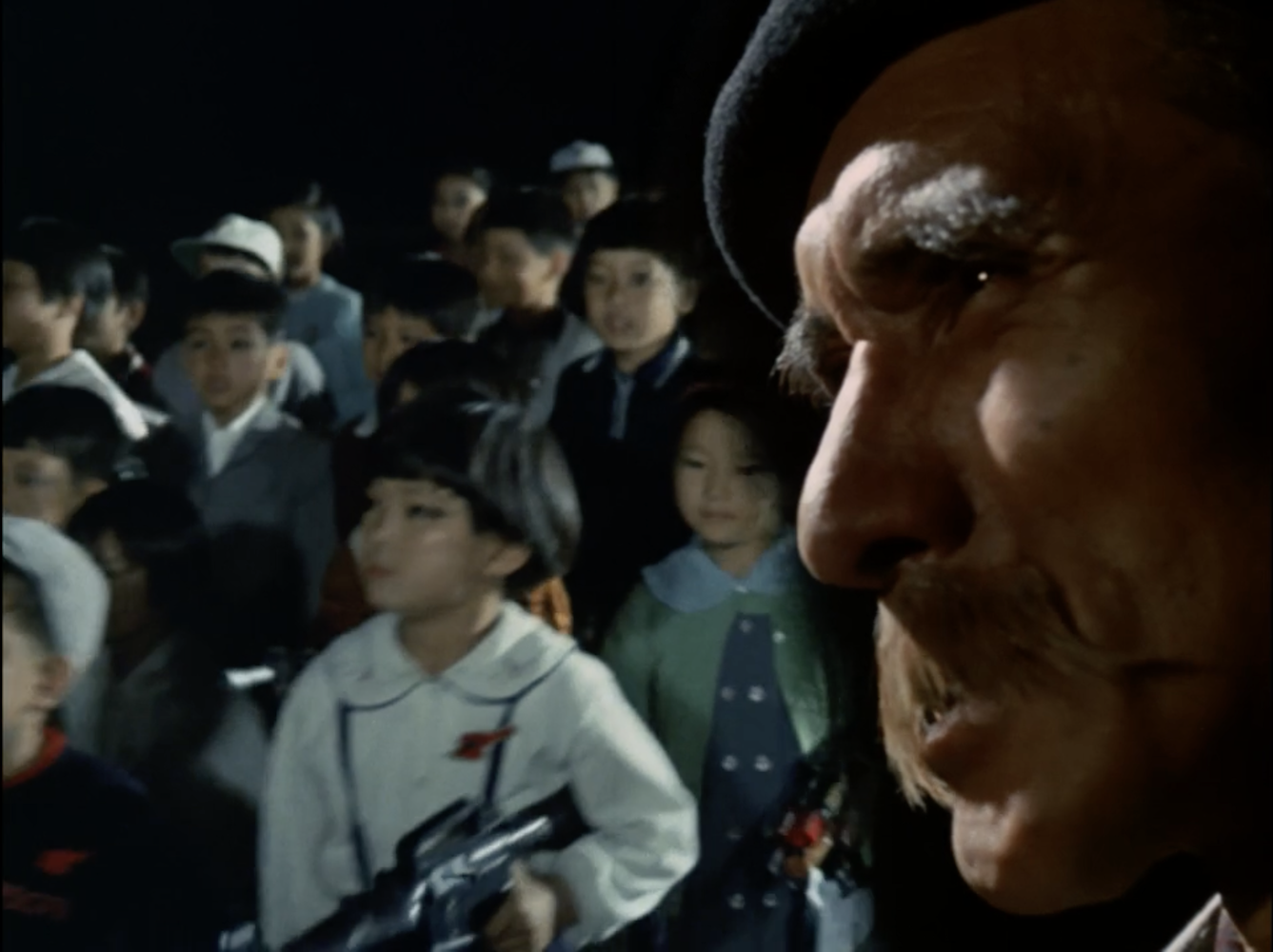
Alien Chibull (played in human form by Kenjiro Uemura) has disguised himself as a toy-seller to give Japanese children an arsenal of toy guns along with special badges. When Chibull activates the titular Operation Android Zero, the toy guns will change into actual guns and the badges will hypnotize the children into an army of killer slaves.
No, this won’t conquer the world. I don’t think Alien Chibull distributed his disguised guns over more than a few Tokyo neighborhoods. It’s still a hideous plan that would end in a bloodbath of dead kids.
The plot might have felt a bit “cute” when writer Shozo Uehara put it on paper in 1967, but it’s a nightmare to think about today. Ultraseven doesn’t feature children as often as many of the other shows, and when it does, the children aren’t the guest stars — they’re the villains.
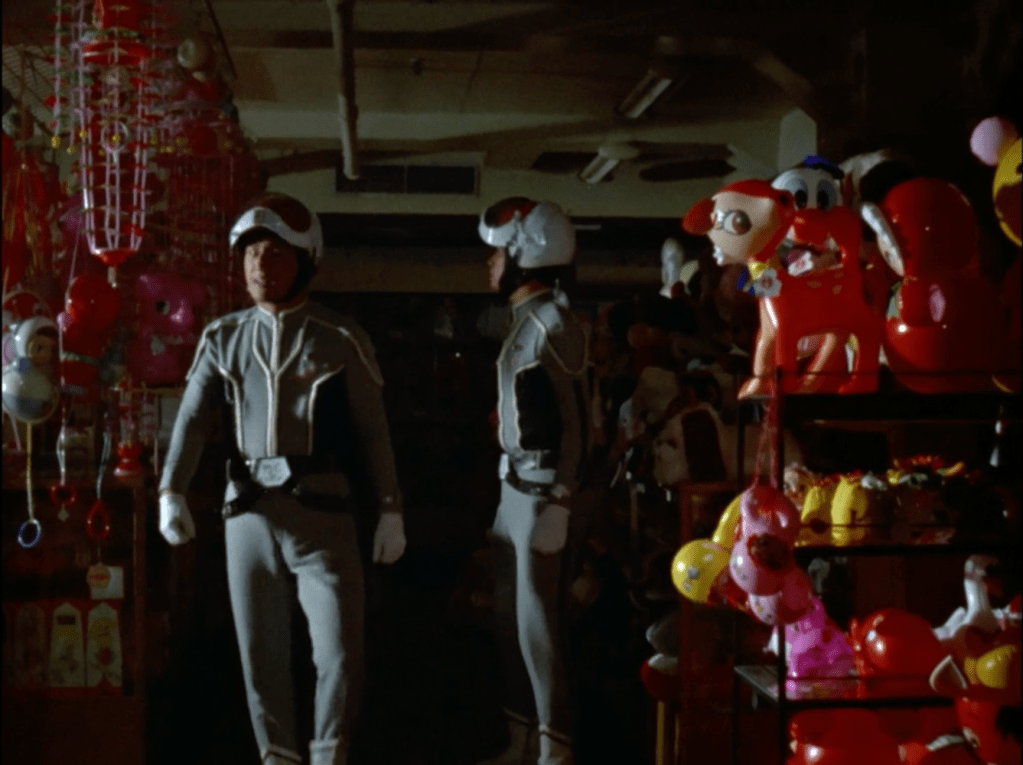
The climax is a fantastic spectacle considering it was shot on a slim budget with no VFX soundstage model work. Dan and Soga have to dodge Alien Chibull’s killer toy tanks, robots, and planes, as well as the laser-shooting android Zero One (Yukiko Kobayashi from Destroy All Monsters) inside a shadowy department store. This isn’t tokusatsu action; it’s crime drama action against a Batman supervillain, but it’s an exciting change of style. Dan eventually turns into Seven for a short wrap-up against Zero One and Chibull’s alien form, but the big climax already occurred.

Although Alien Chibull’s scheme is unique, it has two familiar aspects taken from earlier episodes that are a bit funny to see on repeat:
- An enemy disguised as an attractive woman (an android in this case) tricks a male Ultra Guard member and almost kills him. It’s Furuhasi who falls for it. Again. His record is not good at this. You’d think the male Ultra Guard members would have picked up that aliens use horniness as a weapon.
- The alien invader again knows Dan Moroboshi is actually Ultraseven and attempts to kill him as part of the plot. The alien only misses because, well, see #1 above: Furuhasi thought pretending he was Dan would impress a strange woman with a blonde wig and gold-lamé dress standing in the middle of the road at night. No warning signs there, Furuhasi-san?
Alien Chibull’s real form — a metallic brain with octopus tentacles — only appears briefly, but he’s memorable enough to have gotten the later role of the overarching villain in Ultraman Ginga S. He uses an exoskeleton to move around and look a bit more threatening in that show, but there’s still something inherently silly about him. His human form is far scarier.
As much as I admire this episode, it isn’t the easiest watch for me because of the theme of gun violence and children. There are several Ultra episodes where kids are allowed to wield heavy weaponry, such as the Ultra Q ‘s “Grow Up! Little Turtle!” But those moments play as childish wish-fulfillment, and the weapons often have a science-fiction slant that makes them feel like toys. The guns Alien Chibull gives his unwilling army of small killers are no joke, and the children show levels of bloodlust even before Operation Android Zero kicks off.
It is disturbing how closely this reflects the increasing levels of gun violence in the US that often involve children. I’m unsure how much writer Shozo Uehara intended to deliver a message so grim. It was probably partially intentional: Uehara was one of the best writers for the early Ultra shows, and Ultraseven frequently went to dark places, and this episode has only gotten darker over the decades.
Rating: Great
Previous: The Marked Town
Next: The Suspicious Neighbor
 The Ultra Project