Directed by Akio Jissoji. Written by Tetsuo Kinjo. Airdate Nov. 19, 1967.
After seven episodes of sporadic success sifting through the basics, Ultraseven at last comes together in one of the most memorable and imitated half hours in all of tokusatsu. There are episodes ahead I like more, but “The Marked Town” is a landmark and arguably the show’s essential episode. A simple case of “If you see only one Ultraseven episode, make it this one.”
“The Marked Town” is the only collaboration between two of the creative titans of the Ultra Series: director Akio Jissoji and writer Tetsuo Kinjo. I’ve already discussed Kinjo, who helped steer the series from its earliest development for Ultra Q. This is the first time I’ve written about Jissoji, and I’m going to refrain from going into a deep dive on his background; I’ll save that for when I look at his first Ultraman episode (if we don’t count the preview show “The Birth of Ultraman,” and we shouldn’t; even Jissoji had his name removed from it).
The simple version is that Akio Jissoji is the most idiosyncratic, experimental, and visually unique director in the Ultra Series. You can pick his episodes out of a lineup in seconds, there’s no mistaking them. He loves unusual camera angles, partially obscured frames, dim lighting, deliberately stage-like visuals, and dreamy effects with smeared lighting.
Kinjo’s script is about an insidious alien invasion that strikes at one of humanity’s worst weaknesses: smoking. Alien Metron’s diabolical plan to shred the fabric of Earth’s societies is to fill vending machines with poisoned cigarettes that cause smokers to fly into violent rages. Alien Metron picks an unassuming town to use as the test case.
It sounds absurd, like a cracked anti-smoking PSA. Which it is, but Jissoji and Kinjo are the type of geniuses who can use absurdity as a tool for tension and drama. It’s Jissoji’s stock-in-trade, and Kinjo’s most serious side as a writer is a perfect match for the material. When the elements fall into place, Alien Metron’s plan makes devious, almost depressing sense.
The episode explodes with a disturbing opening that emphasizes realism. A man kidnaps a woman, drags her from a car, and starts to slap and assault her. We soon discover a flap of violent incidents and accidents have recently occurred, all traceable to individuals from one town, Kitagama-cho. Anne’s uncle was one of the affected people: he was the pilot of a commercial plane that crashed, killing 130. This mixes an element of personal tragedy into the madness.
The story is bleak territory and the darkest place Ultraseven has gone yet. Jissoji shoots the scenes of violent outbreaks with jagged, claustrophobic camerawork, then follows this with gritty interrogation scenes far removed from the near-future setting. These scenes would fit easily into a modern cop drama.
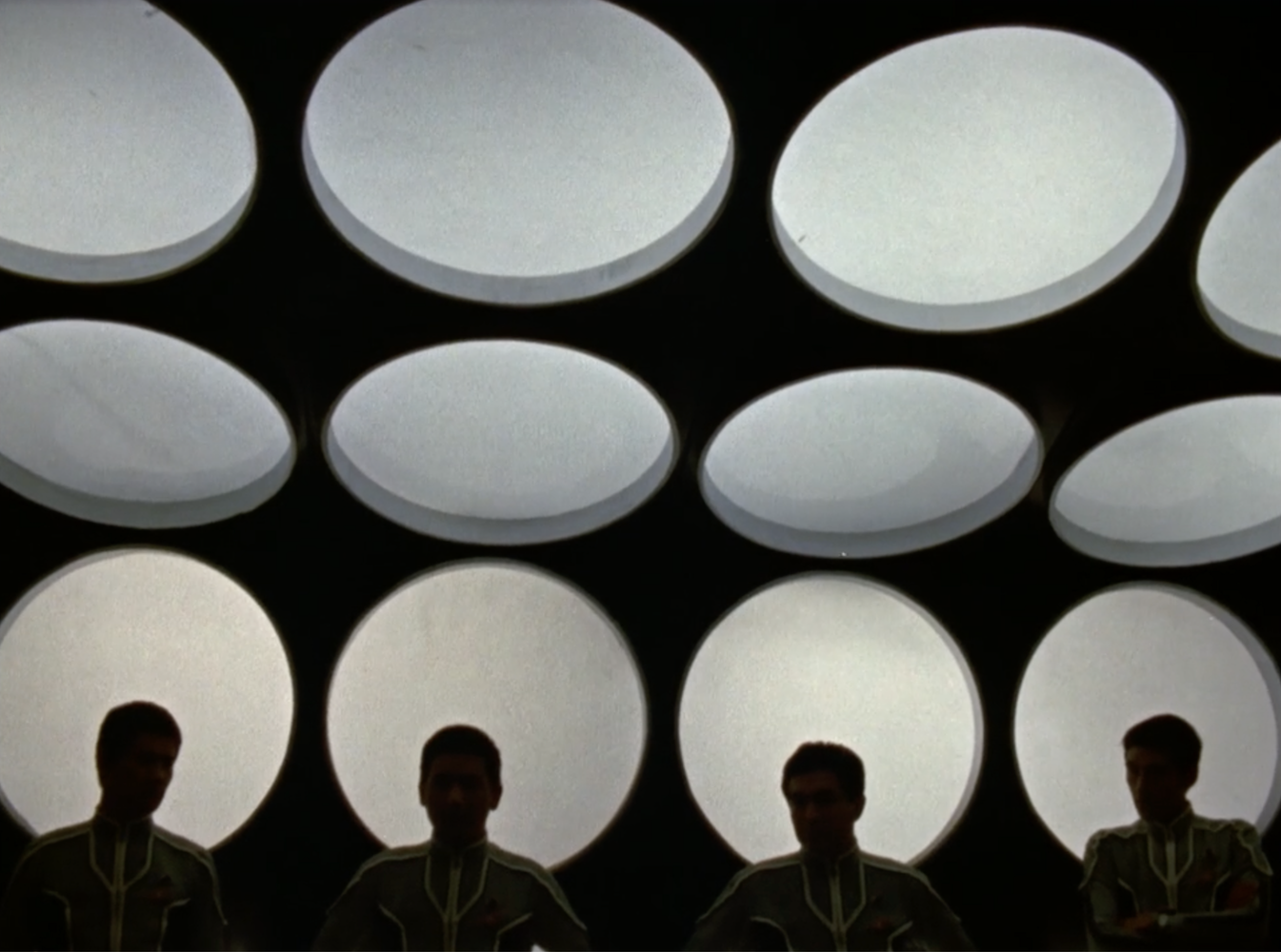
As the plot shifts to Dan and the Ultra Guard’s investigation into why Kitagama-cho has become a bloodthirsty epicenter, Jissoji starts to shift his visuals to his more science-fiction, dreamlike style. The change is effective, pushing the episode into alien strangeness — a place where the colorfully weird Alien Metron fits right in — without diminishing the ugly realism. It’s one of Jissoji’s most deft directorial moves.
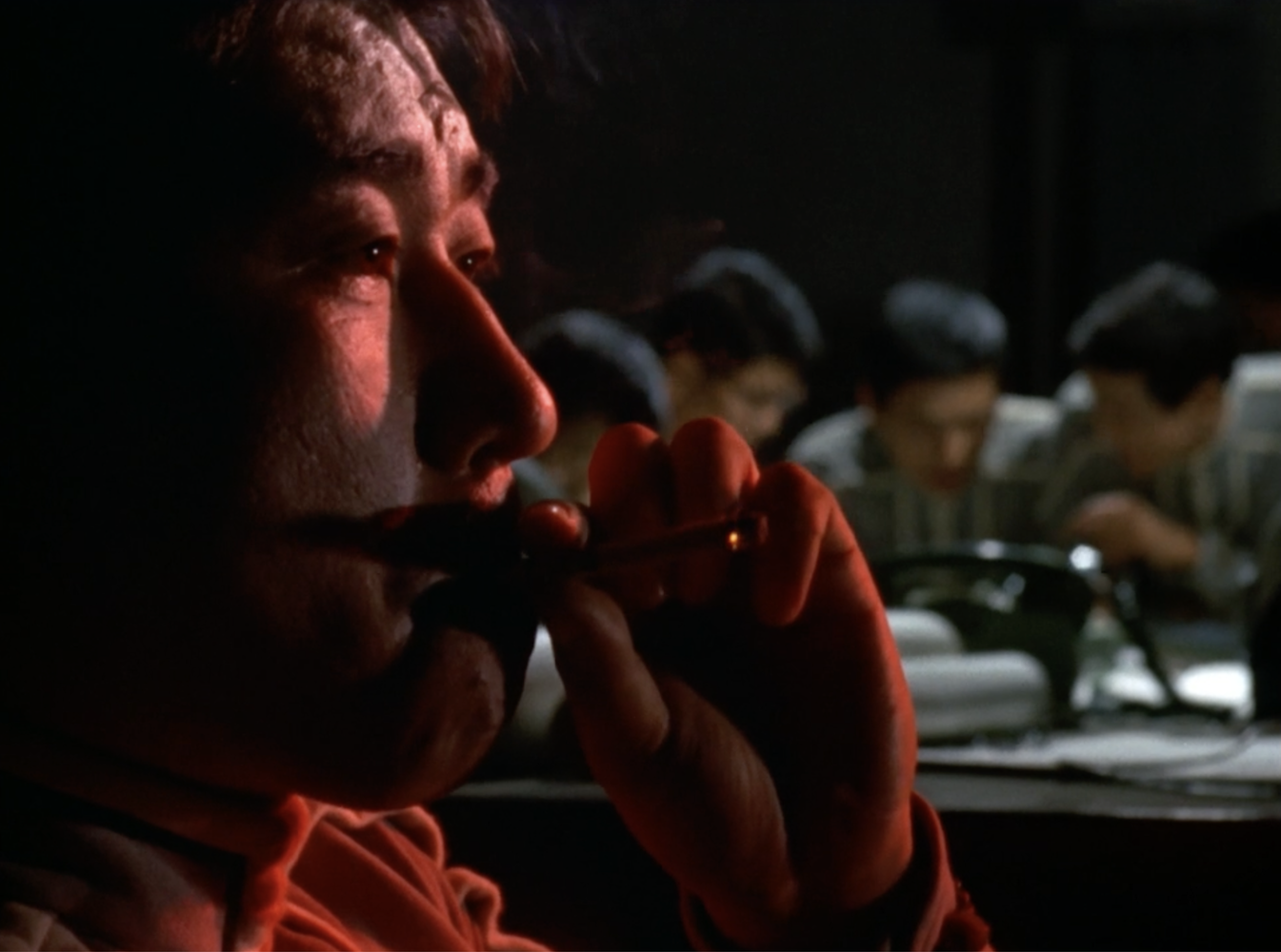
The audience learns before the Ultra Guard does that cigarettes are triggering the violence. The camera generates fear by focusing on people in shadowy rooms taking sinister drags on cigs. The world of the Ultra Guard takes on an entirely different appearance, full of dark chambers and hellish red glows. It doesn’t make practical sense, as if the UG forgot to pay their lighting bill, but Jissoji executes his style so that mood supersedes realism.
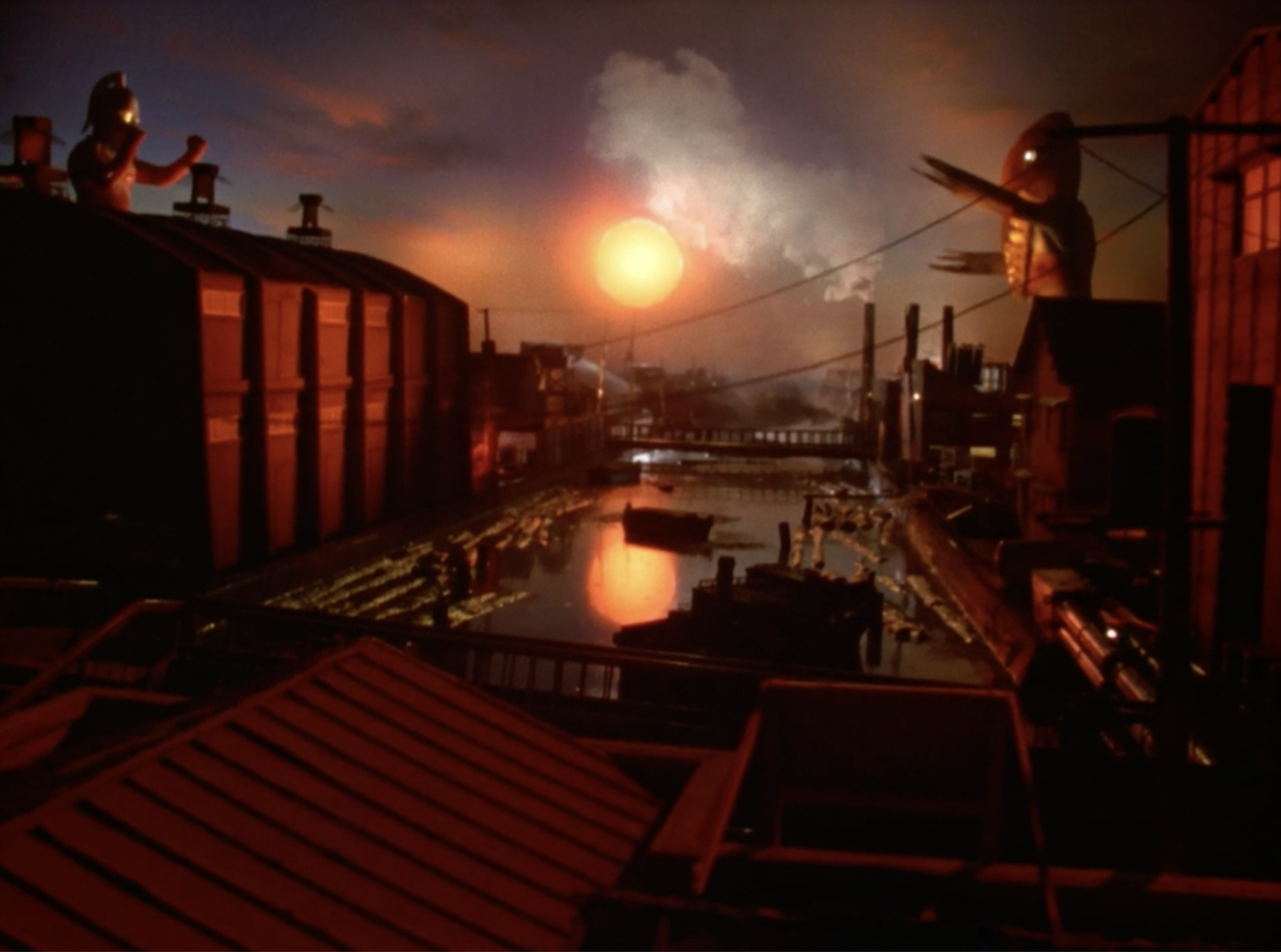
The finale, with Dan first confronting Alien Metron and then launching into a clash between the Ultra Guard, Ultraseven, and an enlarged Alien Metron, is the archetypal Ultraseven battle. A gorgeous sunset confrontation with fast cuts and freeze frames. It doesn’t last long, as is often the case with fights in the show, but it’s a memorable spectacle and one of the franchise’s best VFX displays, often imitated. The “Song of Ultraseven” plays to a rousing effect as the Ultra Hawk 1 blasts the alien ships and Seven and Metron charge at each other.
The episode wraps up with a cynical voiceover that Jissoji allegedly inserted into Kinjo’s script. The narration drives home that Alien Metron’s plan isn’t as ludicrous as it sounds: you don’t need to conquer humans, you just make them fear each other so they’ll tear each other apart. It’s a message with continued ugly timeliness. It was true when Rod Serling wrote “The Monsters Are Due on Maple Street” for The Twilight Zone, and it’s true now.
Akio Jissoji would return to this story almost 40 years later with a sequel, “The Unmarked Town,” in Ultraman Max. It was his last Ultra episode, an appropriate final bow.
Rating: Classic
Previous: Space Prisoner 303
Next: Operation Android Zero
 The Ultra Project