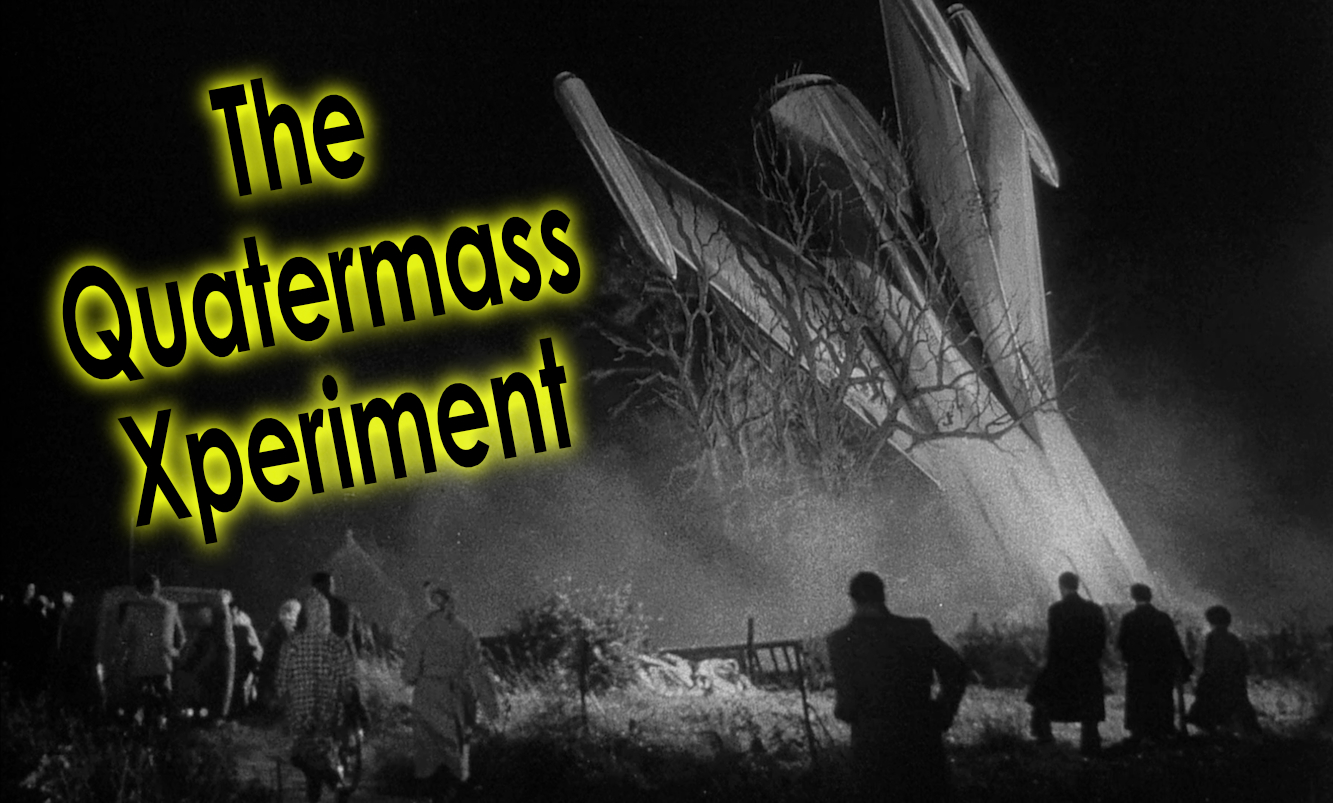
Directed by Val Guest. Written by Richard Landau and Val Guest. Starring Brian Donlevy, Richard Wordsworth, Jack Warner.
I keep bumping into the British Quatermass series as I write these reviews — specifically the 1955 film The Quatermass Xperiment. This isn’t surprising. The movie was a huge hit when released in Japan a few months after its UK premiere. This was only a year after the release of the original Godzilla, so the country was primed for more science-fiction horror.
The popularity of The Quatermass Xperiment in Japan spawned a series of “mutant human” films like The H-Man (1958) and The Human Vapor (1960), both directed by Ishiro Honda with effects by Eiji Tsuburaya. Tsuburaya must have had special love for The Quatermass Xperiment because its fingerprints are all over Ultra Q episodes like “The Gift From Space”, “Balloonga,” and “I Saw a Bird.” It’s also the basis for one of the great Ultraman episodes, “My Home Is Earth.”
So it’s time to stop merely referencing The Quatermass Xperiment and instead give readers a closer look at it. Warning, this will be a “spoiler” review, because exploring the movie’s themes in depth requires going all the way to the last stop on this rocket trip.
The Quatermass series launched in 1954 with the BBC broadcast of the six-part television serial The Quatermass Experiment from writer Nigel Kneale. The series was so popular that it emptied out pubs and streets whenever it was on. The next year, Hammer Film Productions released a movie version, The Quatermass Xperiment. (The title change was a bit of clever promotion, highlighting the “X” certificate the film received that barred anyone under 16 from seeing it.) The movie’s success helped turn Hammer into the legendary terror factory that would dominate British horror for the next decade and a half.
Like many 1950s science-fiction films, The Quatermass Xperiment peers into contemporary anxieties about crossing scientific thresholds. Humans were on the verge of crossing into the great frontier of space. What would they find out there?
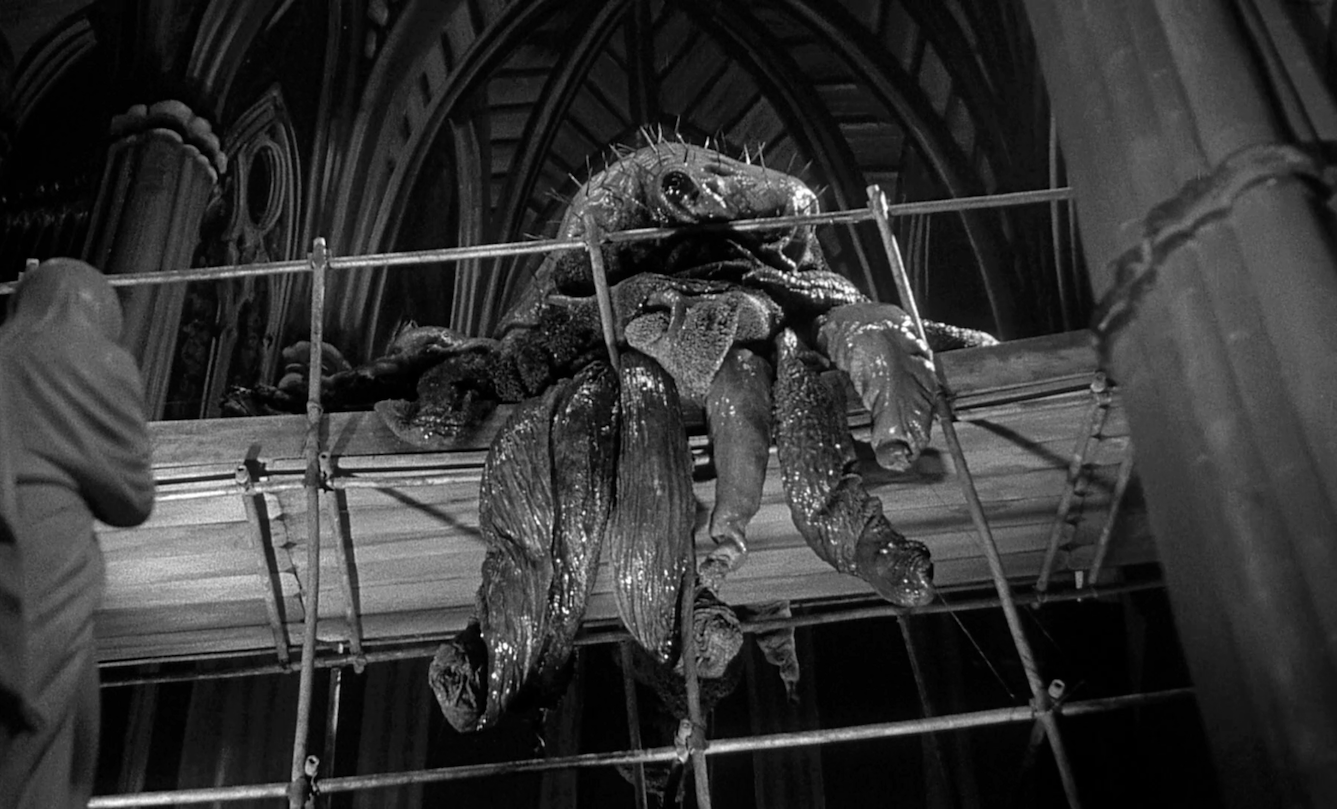
The movie’s answer is a queasy one. It’s not little green men, robots, or big bugs. It’s something incomprehensibly alien.
This is a body horror invasion, a true “invader within.” An extraterrestrial force possesses a returned astronaut, Victor Carroon, and begins to mutate him, threatening to eventually spread its cells. When the astronaut escapes from a hospital, leaving behind a series of hideous-looking victims, he becomes the target of a manhunt racing to destroy him before the alien mutation can spread and become unstoppable.
The premise could fit any number of movies that Hollywood B-picture units were cranking out. But The Quatermass Xperiment brought a specifically British perspective to the material. The semi-documentary style was popular with American Atomic Age films, but director Val Guest pushed the realism even farther, using Britain’s still fresh memories of the Blitz to make a movie that feels factual and urgent.
In an interview with Hammer historian Marcus Hearn, Val Guest explained his approach: “I felt that instead of trying to do it as a science-fiction film, that I would like to do it as a science-fact film, so that people believed it rather than say, ‘Oh, isn’t that a spooky film!’ And so I got [producer] Tony Hinds to let me shoot it almost as though I was shooting a special program for the BBC or something.”
Nigel Kneale wasn’t happy with many of the choices Guest and co-screenwriter Richard Landau made for the film. No choice upset Kneale more than the casting of protagonist Bernard Quatermass, the scientist who heads the British–American Rocket Group behind the failed rocket expedition. To help the film in international markets, Hammer cast American actor Brian Donlevy, who had a history playing villains in Hollywood dramas. The hefty and brash Donlevy was nothing like Reginald Tate’s genteel English professor from the television serial. In fact, Donlevy’s Quatermass would easily win the award for “Scientist Most Likely to Punch a Reporter.”
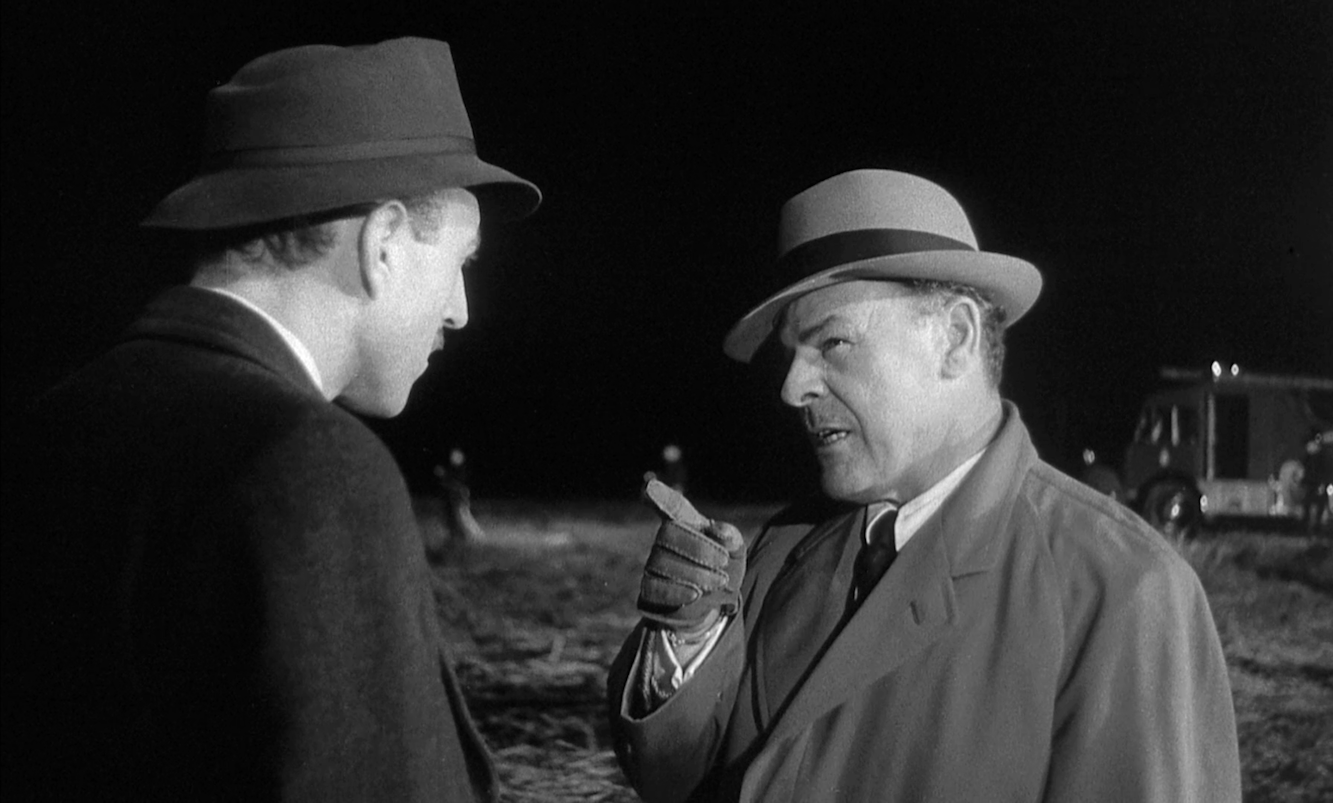
Guest, however, was pleased with Donlevy because he felt he gave the film more reality. Although I’ve only seen the two surviving episodes of the television serial to judge Reginald Tate’s performance against Brian Donlevy’s, I’m on Guest’s side here: Donlevy punches up the movie with a rough edge and urgency that matches the docu-style. He’s certainly an odd scientist. He has the brute force of a tank, seems to lack intellectual curiosity outside of achieving his immediate goals, and carries himself more like a police detective than the film’s actual police detectives. His attitude can be summed up by the line, “Don’t argue with me, I know what I’m doing!” Carroon’s wife has stern words to Quatermass that only make sense with Donlevy’s performance: “You’ve destroyed him … like you’ve destroyed everything else you’ve touched.”
This stubborn and myopic version of Quatermass emphasizes one of the film’s main themes: What’s the cost of scientific progress that doesn’t take into consideration the “human factor”? The atomic bomb was a terrifying real-world example of what “progress” might look like; The Quatermass Xperiment and Quatermass himself capture that anxiety better than most science-fiction films of the era.
The movie is too good overall for any one person to steal it, but actor Richard Wordsworth comes the closest as the mutating, unspeaking Victor Carroon. Wordsworth, the great-great-great grandson of Romantic poet William Wordsworth (really), gives a remarkable pantomime portrayal as the tortured astronaut. Wordsworth already had a memorable face to fit this type of performance, and the weird simmering tension he puts into every muscle is extraordinary to watch. Critics often compare his acting here to Boris Karloff’s in Frankenstein, and it’s a fair comparison. Wordsworth is terrifying and tragic as he senses his humanity leaching away while his body becomes more hideous.
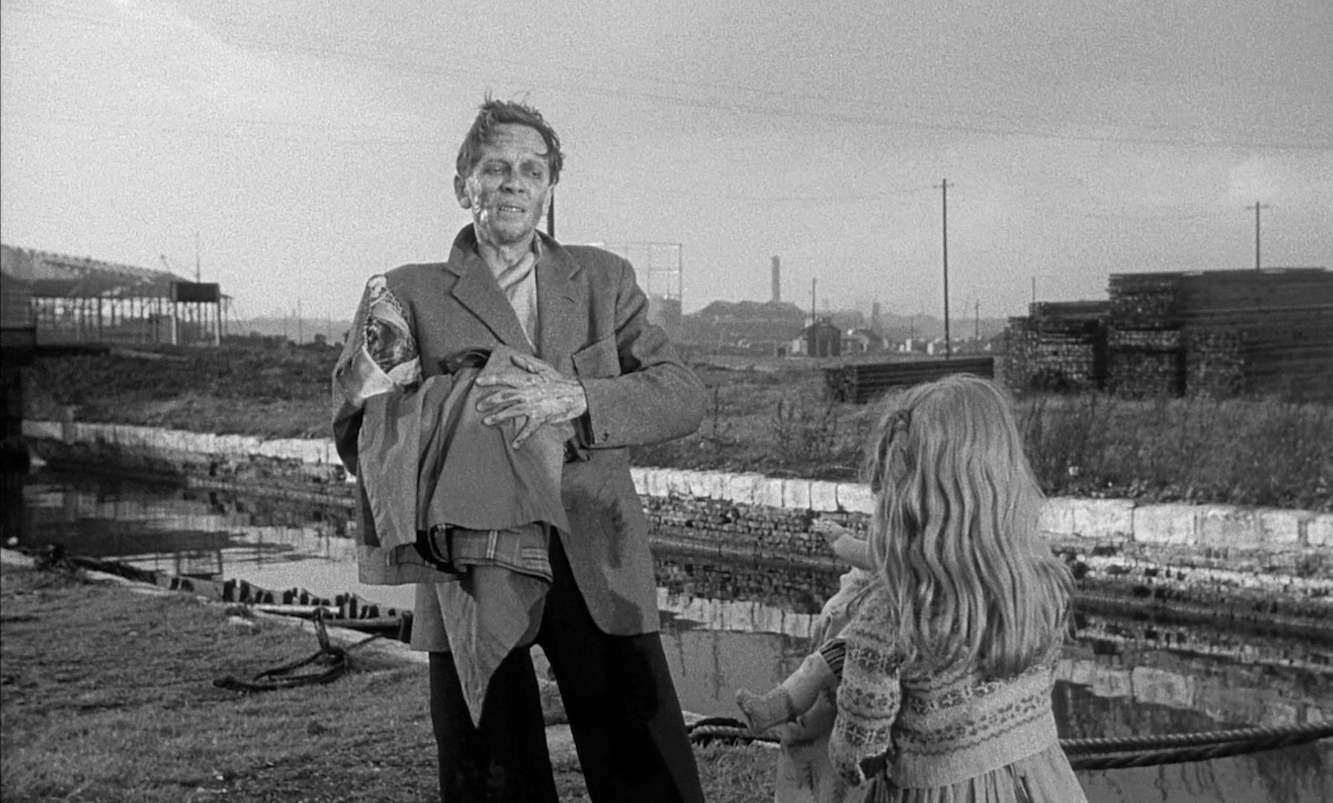
The most overt Frankenstein moment is when Carroon encounters a young girl picnicking with her doll beside a canal — a direct homage to the famous scene in the 1931 Frankenstein where the Monster discovers a girl playing near a lake. The girl isn’t afraid of this strange, mute man, but Carroon recoils from her gestures of kindness. Wordsworth is amazing at showing how Carroon’s last tatters of humanity are repulsed at the rising alien desire to kill this child. This is Wordsworth’s final scene in the film. Carroon’s human form vanishes under the alien mutation, eventually becoming a mollusk-like tentacled heap.
Val Guest’s staging becomes increasingly stranger and moodier as the alien transformation increases. A sequence in a zoo at night, where viewers only catch glimpses of what Carroon has become but see how this monstrosity sends the caged animals into a panic, is one of the best in the film. Legendary director John Carpenter, a huge fan of the Quatermass series, called the zoo scene “about as good as it gets.” It’s also the scene lifted almost shot-for-shot for the opening of the Ultra Q episode “I Saw a Bird.”
For the finale, the filmmakers made another major change to the TV serial. In the television version, Quatermass confronts the last stage of the alien mutation inside Westminster Abbey. He manages to reach the remaining shreds of Carroon’s mind and convinces the creature to destroy itself. The movie also ends in a confrontation in Westminster Abbey, but Brian Donlevy’s Quatermass isn’t going to sweet talk some monster. He’s going to blow it the hell up. Nigel Kneale was furious with this change to his ending — but, damn, it’s a banger. Val Guest knew what he was doing and delivered audiences the white-knuckle climax with pyrotechnics they deserved. James Bernard’s score is electrifying with its propulsive, frantic strings that push the tension over the top.
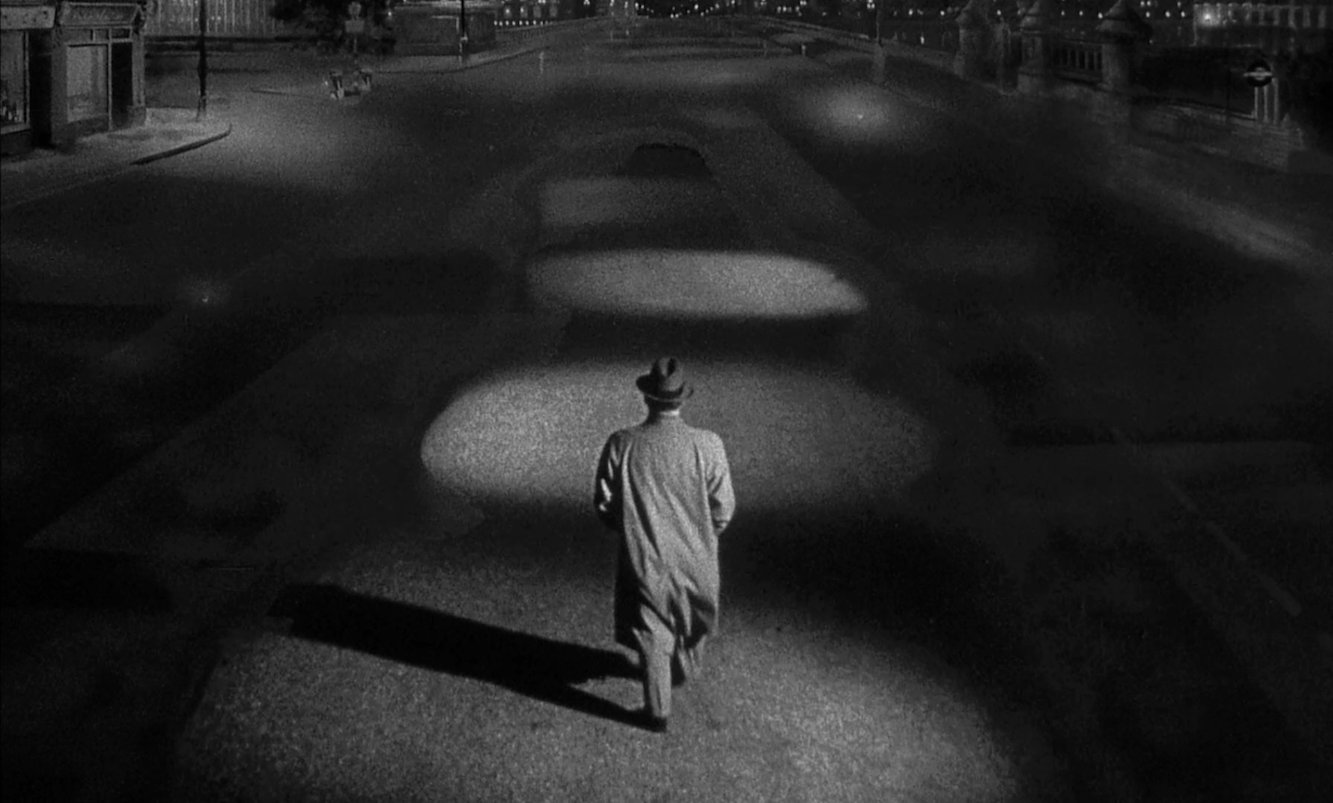
The coda puts the final stamp of “Masterpiece” on The Quatermass Xperiment. Bernard Quatermass doesn’t spend a moment to mourn the dead astronauts or contemplate the horror everyone has just gone through. He brusquely marches from the cathedral to get to work launching the next rocket. The final images show him striding into darkness, a cross fade revealing another rocket taking off. It’s a brutal closing — humanity has learned nothing from the horror.
Rating: Classic
 The Ultra Project