
Directed by Harunosuke Nakagawa. Written by Masahiro Yamada. Airdate March 20, 1966.
The simplistic title may sound like a children’s story. Which it is. But it’s not an ironic fairy tale like the hyper-looney “Grow Up! Little Turtle.” “I Saw a Bird” is a giant monster tale from the perspective of a child. The kaiju element is downplayed in favor of a bittersweet fable about a lonely boy and his bird.
The prologue promises a horror-filled episode with a scene that directly homages The Quatermass Xperiment. This isn’t the first time Ultra Q has referenced Hammer’s Quatermass films, and certainly not the last. At night in a city zoo, a mysterious intruder disturbs the caged animals. It attacks a zookeeper, and the man’s dying words to the police are enigmatic: “I saw a bird.”
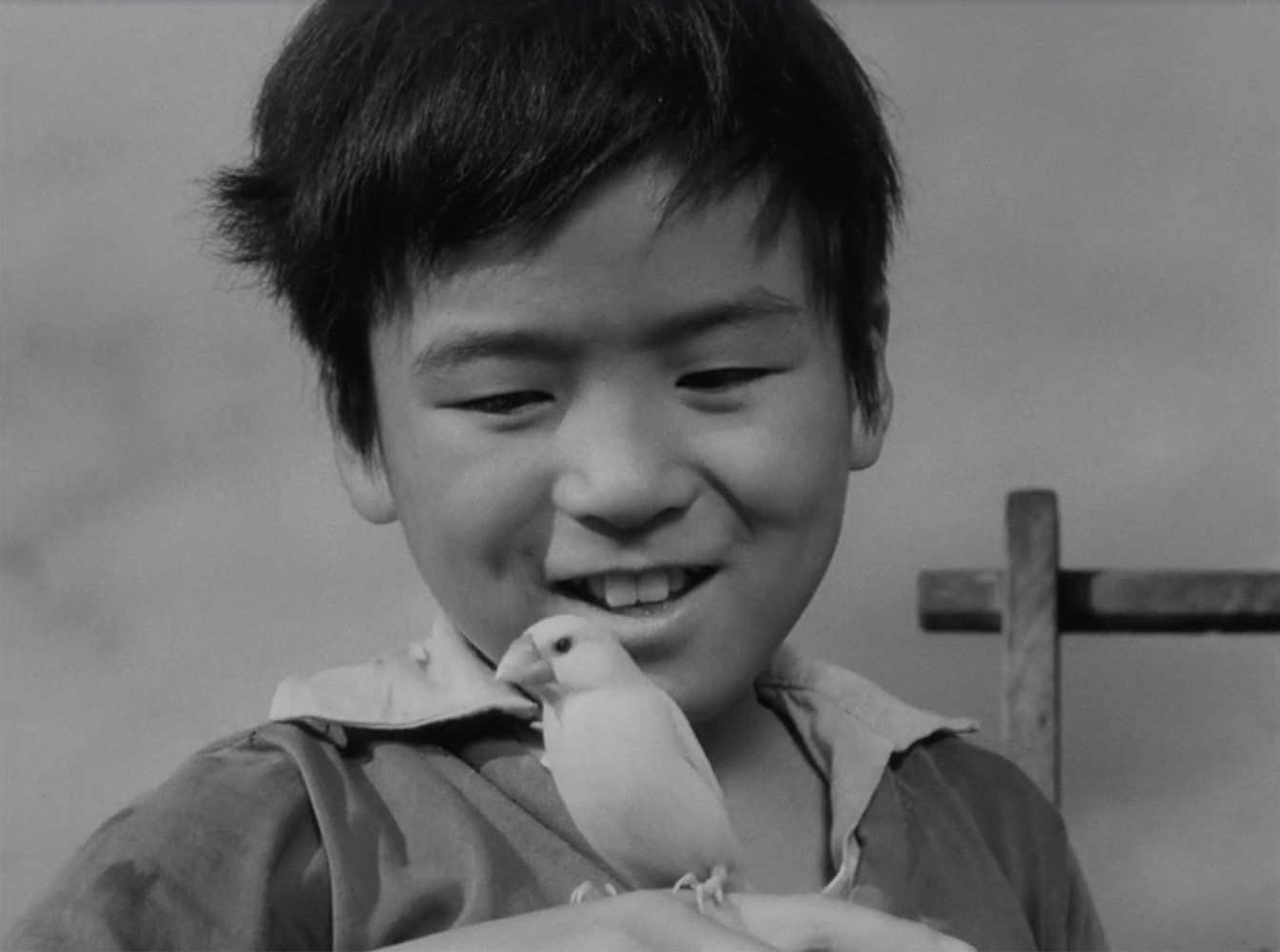
It’s an effective atmospheric opening, but it has little to do with the rest of the episode. The zoo incident will receive mention later, but exactly how it links to other events remains unclear. After an abbreviated title sequence, the mood shifts as the action jumps to a fishing village. Here we meet Saburo, an orphaned boy who lives a makeshift existence in a hut at the edge of the village. The way the camera follows young Saburo as the village stirs with excitement about a mysterious event in the bay makes it clear he’s the protagonist of the story.
The agitation in the village is from a vessel that suddenly materialized in the harbor: a ship that looks like a Viking longboat. This paranormal event has brought in Yuriko, with Jun and Ippei tagging along. (They must have helicoptered her here.) When they go aboard the mystery ship with the villagers, they find it’s deserted except for a small bird. The bird flies off and the ship abruptly collapses. All that remains is the ship’s logbook, which also ends abruptly with the phrase, “I saw a bird.”
Professor Ichinotani pops in to offer some exposition and hypotheses to the main trio. He suggests the bird found onboard is actually a prehistoric creature known as a Larugeus, which went extinct during the Ice Age. A Larugeus can grow to immense size when hungry or agitated, but otherwise looks like a normal finch.
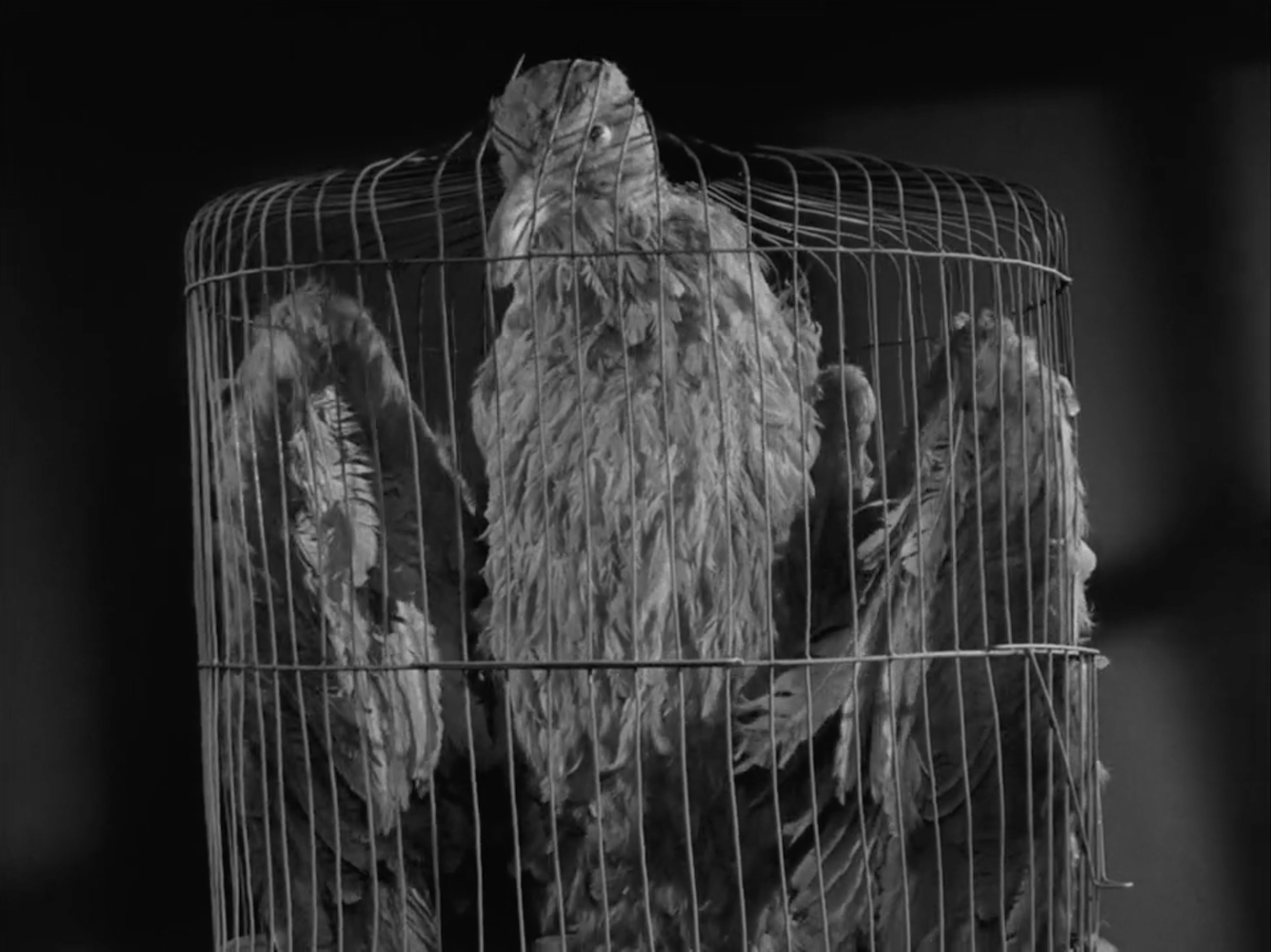
All of this sounds like setup for a major payoff, but most of it doesn’t matter. None of the theories about the ship and bird arriving via fourth-dimensional travel go anywhere. The Viking longboat receives no explanation. Why was an Ice Age bird on a tenth-century ship? Why did the ship abruptly crumble? Where did the Larugeus that attacked the zoo in the opening come from? I can imagine a version of “I Saw a Bird” focused on these paranormal riddles. It would probably end with a giant Larugeus in the middle of Tokyo while scientists try to work a dimensional travel device to send the big bird back in time. Standard giant monster shenanigans.
But that’s not this episode. This is the story of Saburo, the boy who befriends the small bird from the Viking ship. It’s a sweet, touching little tale. It benefits from the mysteries of the episode, and giant monster action does eventually happen, but these aren’t the elements you’ll remember later.
The secret ingredient that makes “I Saw a Bird” work despite its ragged edges and vestigial elements is Akihide Tsuzawa, the young actor playing Saburo. Tsuzawa would go on to play Hoshino on Ultraman, the youthful “mascot” of the Science Patrol. All Tsuzawa’s scenes acting across from a tiny finch have heart. You believe Saburo’s affection for the bird, and that the bird is attached to him as well. It’s genuinely tough to watch when the villagers rough up Saburo, blaming him for the recent death of some chickens.
I understand why Tsuburaya Productions cast Akihide Tsuzawa in Ultraman, and it’s unfortunate that an injury kept him from finishing the full show. I appreciate the character of Hoshino even more now that I’ve seen how good a performance Tsuzawa gives here. This is the kind of heartfelt child character that spoke personally to Eiji Tsuburaya.
The giant monster action arrives with a few minutes left in the episode, and most of it is done using recycled footage from Rodan. The giant Larugeus is itself a re-dressed Rodan prop, the same one used to make Litra in “Get Gomess!” As kaiju finales go, it’s nothing special. The real finale happens in the last shots, which are among the most beautiful and wistful in the show.
Now that I think about it, with all that I’ve written about the Quatermass films and their influence on Ultra Q, I should just get it over with and review The Quatermass Xperiment.
Rating: Good
Previous: Balloonga
Next: Garadama

 The Ultra Project