Directed by Shinya Nakajima. Written by Shukei Nagasaka.
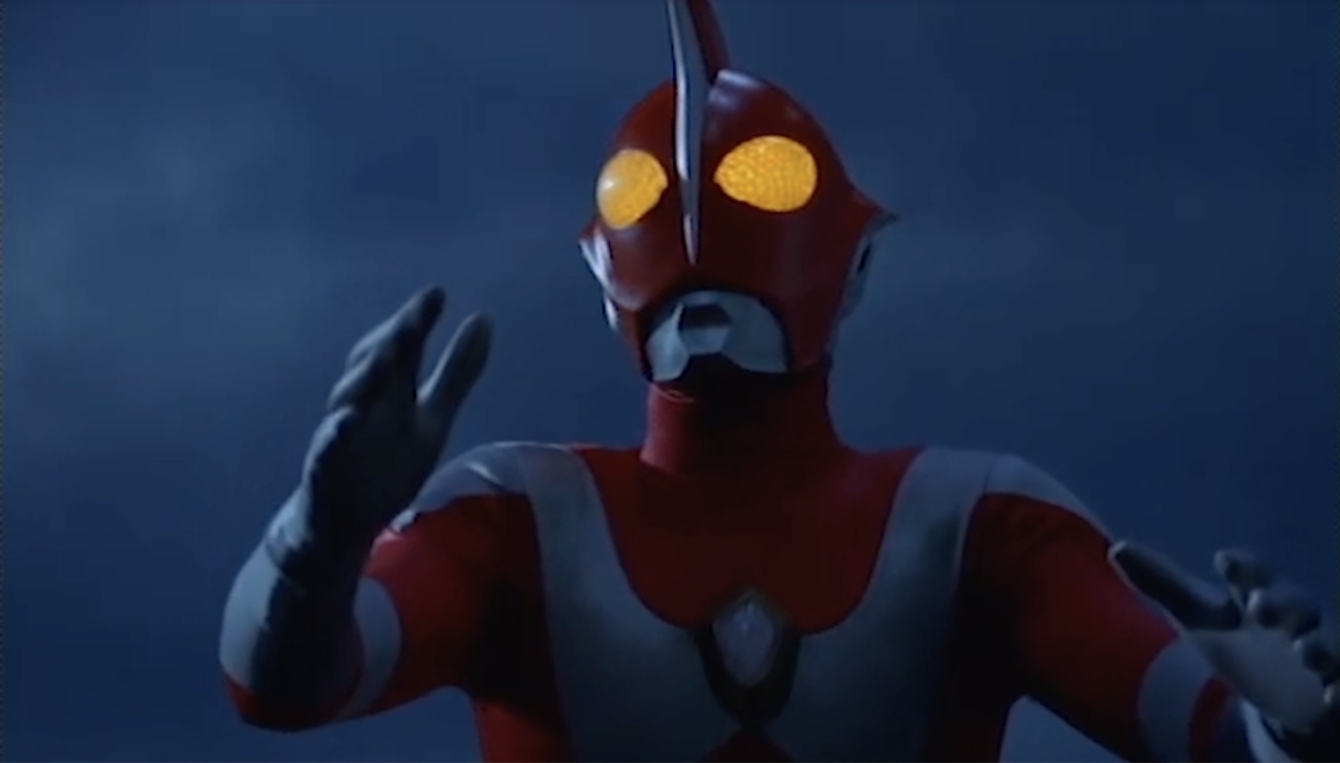
Ultraman Zearth, Earth’s defender from the Land of Bright in Nebula Z95, must stop the schemes of the gold-stealing invader Alien Benzene and its kaiju attack dog, Cotton-Poppe. However, Zearth and his human form, Katsuto Asahi (Masaharu Sekiguchi), face a dreadful obstacle: mysophobia. Ultraman Zearth can’t stand getting dirty. A little grease on his hands and he’s paralyzed or hopping around howling. Oh no, what will the world do? And how can monster-fighting organization MYDO, which operates out of a gas station where the members also pull extra shifts, help in the battle against Alien Benzene while poor Zearth is cringing at having to cross a pool of mud?
So … what is this?
Basically, Ultraman Zearth is a joke movie aimed at kids. It was a hit, which shows that audiences were eager to see Ultraman return after a 15-year absence. Thankfully, the same year Zearth came out, Tsuburaya Productions also debuted the terrific new series Ultraman Tiga, which has since left Ultraman Zearth and its sequel behind as nutty franchise artifacts most fans ignore.
Ultraman Zearth isn’t meant to be taken seriously, nor does it care if anyone over the age of nine watches it. Much of the Ultra franchise has appeal to children, and some shows go the extra distance to appeal to younger viewers, like Ultraman Taro and Ultraman Cosmos. I love that kids enjoy the Ultra series, and some of the child-aimed episodes and shows are among my favorites because of how surreal and strange they get. But Ultraman Zearth crosses my limit for kids’ entertainment. Almost nothing in it is handled seriously so none of it matters. The comedy is rarely funny, even when taken as just childish silliness, and few of the parody ideas play out.

There’s a kernel of an interesting Ultra parody here: the defense team, MYDO, which stands for Mysterious Yonder Defense Organization. The name alone would be a good joke about silly defense team acronyms … if some of the defense teams from the serious shows didn’t have acronyms even more strained and ridiculous. Still, decent try. The movie’s funniest idea is that the members of MYDO must juggle their duties as a high-tech monster-fighting squad with the daily grind of running a gas station while dressed as fast-food workers. But the joke is executed so lazily it hardly generates much laughter. MYDO flies around in a gaudy yellow and blue plane called Sky Fish, which several characters point out has awful colors. Again, a missed chance for humor when the writers have to point out (multiple times) what the joke is.
This is how the movie’s “parody” is handled: broad, over-explained, rarely funny to begin with or potentially funny but squandered in delivery. For example, Katsuto uses a toothbrush to turn into Ultraman! He’s a neat-freak, so of course he’d use a toothbrush. That’s funny, right? How about Katsuto using the famous Ultra beam pose to force soda cans out of the gas station soda machine. Funny? Or simply odd?
Zearth is one of the most annoying Ultra Warriors ever to come to Earth’s defense. The gag that he’s afraid of getting dirty isn’t amusing at all, and any scene of Zearth/Katsuto cringing and flipping out over getting mud or grease on him is aggravating to sit through. It’s low humor that feels like the filmmakers thought only four-year-olds were going to be in the audience. Zearth’s design is an interesting one with a different color layout than other Ultras, but the costume is spandex, which undercuts any grandeur he might have. Tsuburaya Pro’s visual style doesn’t work with spandex, sorry.
There are a few things about Ultraman Zearth I legitimately like. Once Zearth overcomes his low-stakes conflict of hating mud, his final fight with Alien Benzene and Cotton-Poppe is decent. For a few minutes, the joking stops and we see some of the reasons we watch Ultra shows in the first place. Cotton-Poppe is a legitimately effective kaiju design, even if its name is yet another limp joke nobody thought too deeply about. Alien Benzene looks about average for an alien invader; there have been worse.
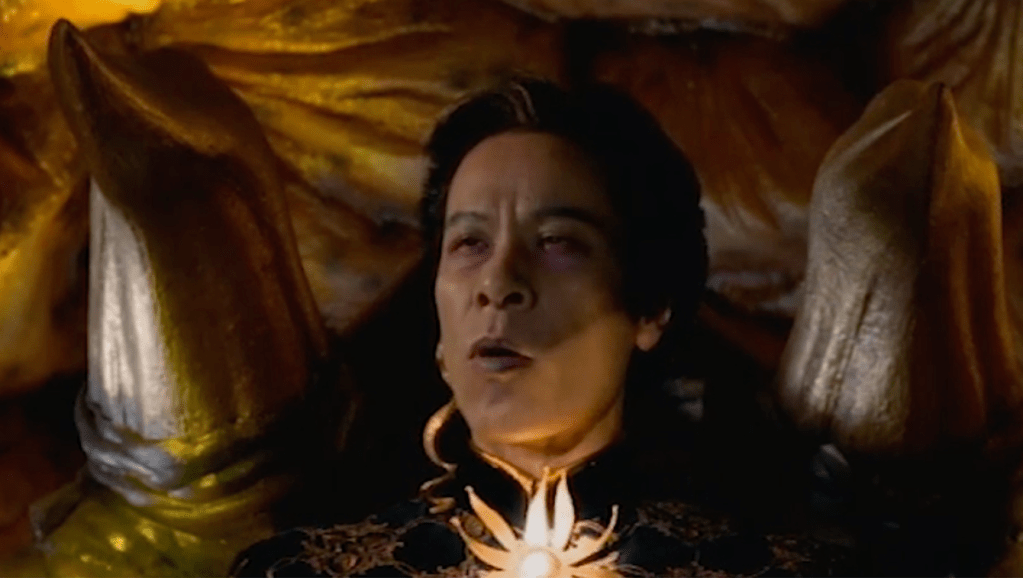
The one comedic performance that works and understands what the parody is supposed to be is Takeshi Kaga as Akuma Ogami, Alien Benzene’s human disguise. Ogami is a spoof on the often lunatic and hammy performances of aliens in the series and tokusatsu in general: a wealthy weirdo with eccentric fashion choices and a love for petty dickery. The best laughs all come from Kaga cranking up his silly evil-doing, making villain speeches about Zearth’s fear of getting dirty. (“You believe you can do nothing when soiled!”) I can detect a better Ultraman parody coming through Kaga’s performance.
The visual effects are a nice surprise. They’re better than what Ultraman Tiga could accomplish on its television budget. The CGI is passable considering how dire they could get in the mid-‘90s, even in major Hollywood movies. I don’t have much to criticize with how the movie looks; the VFX department put in the full effort.
The original cast of Ultraman shows up for cameos. Susumu Kurobe does the beta capsule transformation pose, but it’s only him brandishing a pen flashlight. (Small snicker.) Hiroko Sakurai is a housewife trying to get a photo of the Sky Fish emerging through its exit gate disguised as a billboard. Akiji Kobayashi is fishing in a lake; maybe this is Captain Murumatsu in retirement? Sandayu Dokumamushi is a reporter in a helicopter. (Wait, did he swipe Hiroko Sakurai’s job in Ultra Q?) The funniest of the original Ultraman cast, the comedian most actors in this film are desperately trying to imitate, Mansanari Nihei, gets to do nothing funny in his cameo as a photographer. Maybe that was the joke. Shrug.
Ultraman Zearth runs only a bit over 50 minutes, barely qualifying as a movie even though it was released to theaters. (It played on a bill with Ultraman Company, a half-hour anime, and Revive! Ultraman, a 23-minute clip show of Ultraman episodes). The brevity numbs some of the pain, and the movie doesn’t overstay its welcome so you begin to get angry at it. Considering what I’d heard about Ultraman Zearth before I watched it for the first time, I was surprised I didn’t dislike it more. A repeat viewing does not improve it. It’s still an ordinary bad kid’s comedy with some decent visual effects and an isolated chuckle here and there.
Maybe I should explain…
I’ve gotten this far discussing Ultraman Zearth without explaining why this “30th Anniversary Movie” is the way it is. The reasons are a gas company and Ultraman Tiga. I didn’t feel like loading this production information upfront in the review the way I often do, so now I’ll explain the joke. Hold your laughter until the end, please.
When Tsuburaya Productions was planning a new Ultraman television show for the franchise’s 30th anniversary, a Japanese gas company, Idemitsu Kosan Co., approached TsuPro to use Ultraman to promote its new clean fuel, Zearth. TsuPro decided to make one of the promotions a film to expand its slate of 30th anniversary projects. However, TsuPro didn’t want the new Ultra film to be too similar in tone to the television show they had under development (originally Ultraman Neos, then changed to Ultraman Tiga) out of fear the two might drain interest from each other.
I’m not certain this would have been a problem. Wouldn’t TsuPro want some product synergy? But the choice was made: the movie, titled Ultraman Zearth for maximum product identification, was going to be an outright comedy. And now you also know why the defense team worked out of a gas station. Gotta push that “clean” fuel or whatever it was.
The strategy worked, as both Tiga and Zearth were successful. Zearth got a sequel the next year, which I guess I’ve got to go review as well at some point. Don’t threaten me with a good time, Tsuburaya and Idemitsu Kosan.
(You can laugh now.)
Rating: Poor

 The Ultra Project