
Directed by Toshihiro Iijima. Written by Hiroyasu Yamaura and Toshihiro Iijima. Airdate March 5, 1966.
There’s no “typical” episode of Ultra Q. There are typical episode types, such as the straightforward giant monster stories like “Terror of the Sweet Honey” and “Tokyo Ice Age”; horror episodes like “Devil Child” and “Baron Spider”; the fairy tales of “Grow Up! Little Turtle” and “Kanegon’s Cocoon”; and Twilight Zone and Outer Limits-influenced episodes like “Open Up!” and “The ⅛ Project.” But if I had to pick one episode to represent Ultra Q at its most typically atypical, the episode that manages to pack everything in the writers’ room junk drawer into a half hour, this is it. The last episode produced of the original 28, it reveals the creative team at full power, making one of the crowning achievements of the show.
Now, where to actually start with this one?
The one-sentence story description is laughably inadequate compared to what actually happens: “A mutant monster rampages on board an out-of-control high-speed train.” Try to imagine what that might look like. Sorry, you’re wrong. It’s not like that at all … whatever it was you just thought.
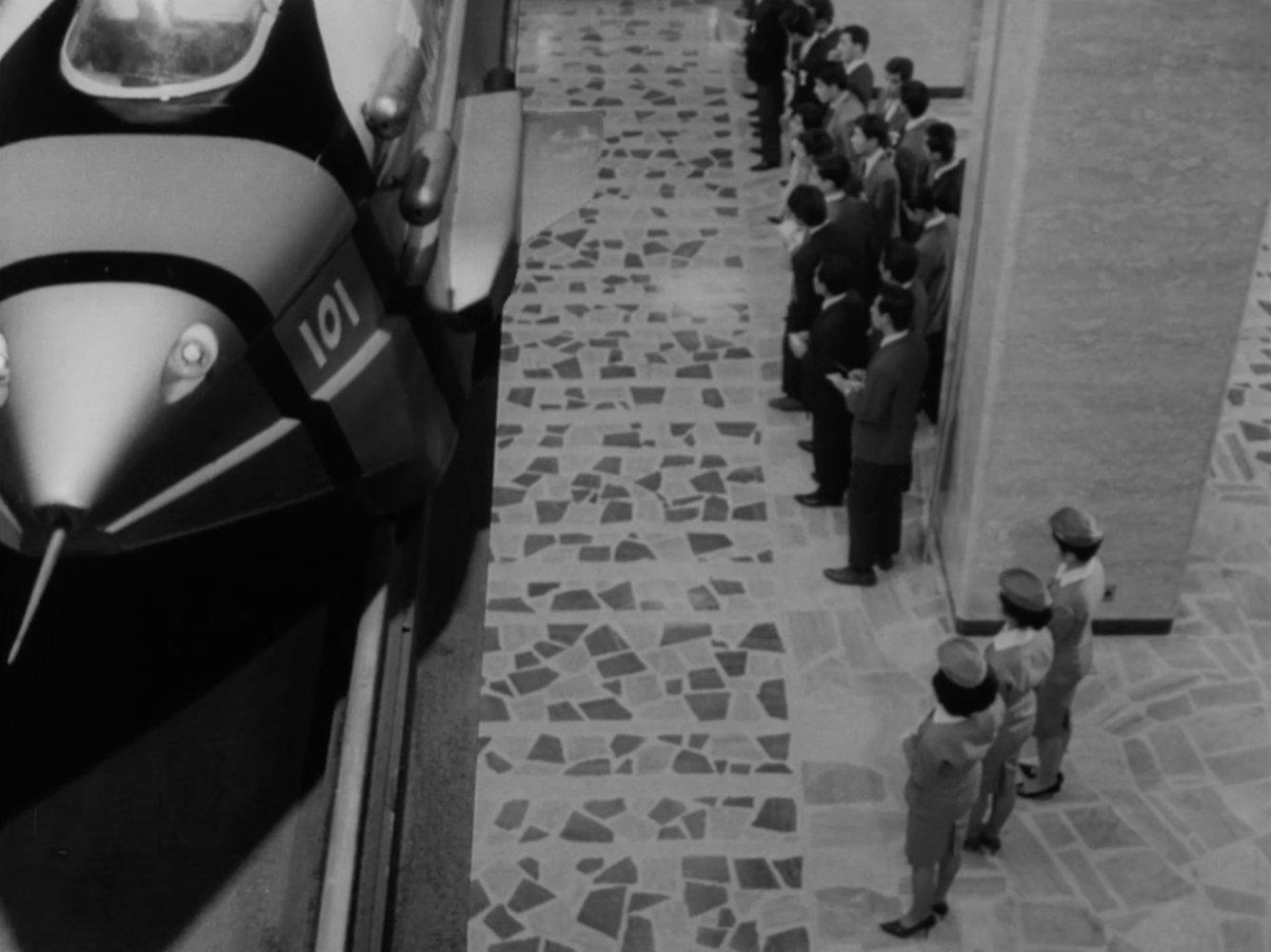
The Super Express of the title was inspired by the cutting-edge technology on the minds of everyone in mid-‘60s Japan: the Shinkansen, a.k.a. the bullet train. The first of these high-speed commuter trains started service in 1964. Ultra Q pushes into the future with the next advancement in high-speed rail transit, the Inazuma, which flashes along at 450 kph (280 mph).
This near-future science collides with weird science when an artificial life form known as M1 gets loose on the train because Ippei grabbed the wrong suitcase when sneaking aboard the Super Express for its first trip. The train has another uninvited passenger, a young shoe-shine boy from the train station who calls himself “Ken the Weasel.” Ken gets on board by pulling the “kids-stacked-in-a-trenchcoat” trick from a Little Rascals film, which fools the Inazuma crew and the pack of reporters invited for the launch of the new train.
What’s remarkable about all this, and we haven’t even gotten to the strangest stuff yet, is how much it tonally hangs together. Credit to director Iijima, a seasoned tokusatsu pro, for corralling all the elements in a slick, entertaining package. The episode moves as swiftly as the train, with constant humor, visually inventive gimmicks, and a sense that this insanity has a determined destination you can’t guess but feel certain you’ll be happy with whenever you arrive.
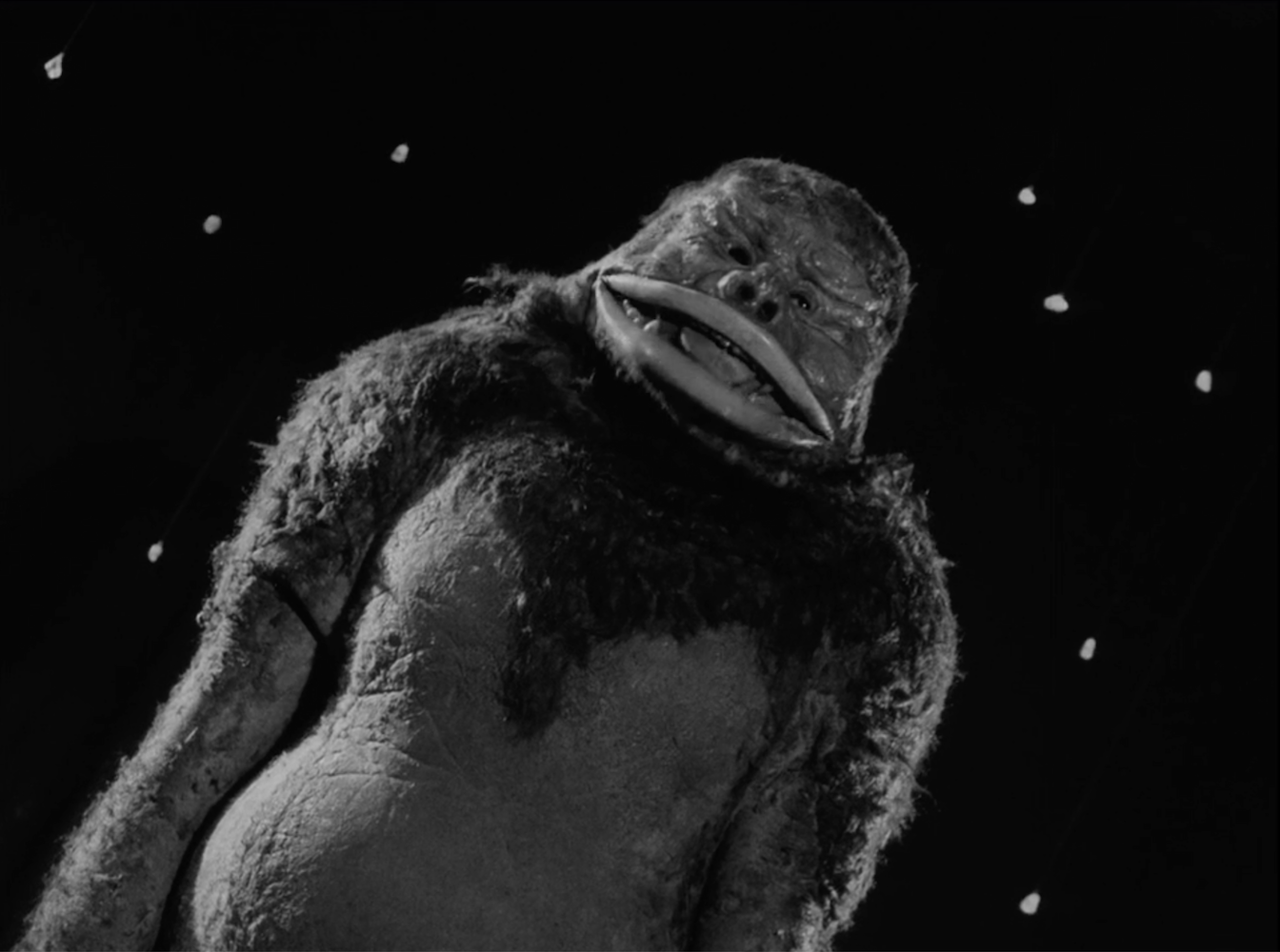
The VFX features extensive and finely designed miniatures. The futuristic Tokyo Train Station with all its moving parts is a marvel, and the matte effects and animation to composite the models of the Inazuma with live footage are seamless. The full-grown M1 is a goofy-looking whatsit resembling a squished gorilla with the face of a Looney Tunes caricature of Edward G. Robinson; but again, this is 100% intentional. Every moment of M1 rambling around the train, swinging its monkey arms as it tries to figure out the gizmos around it, is science-fiction comedy genius.
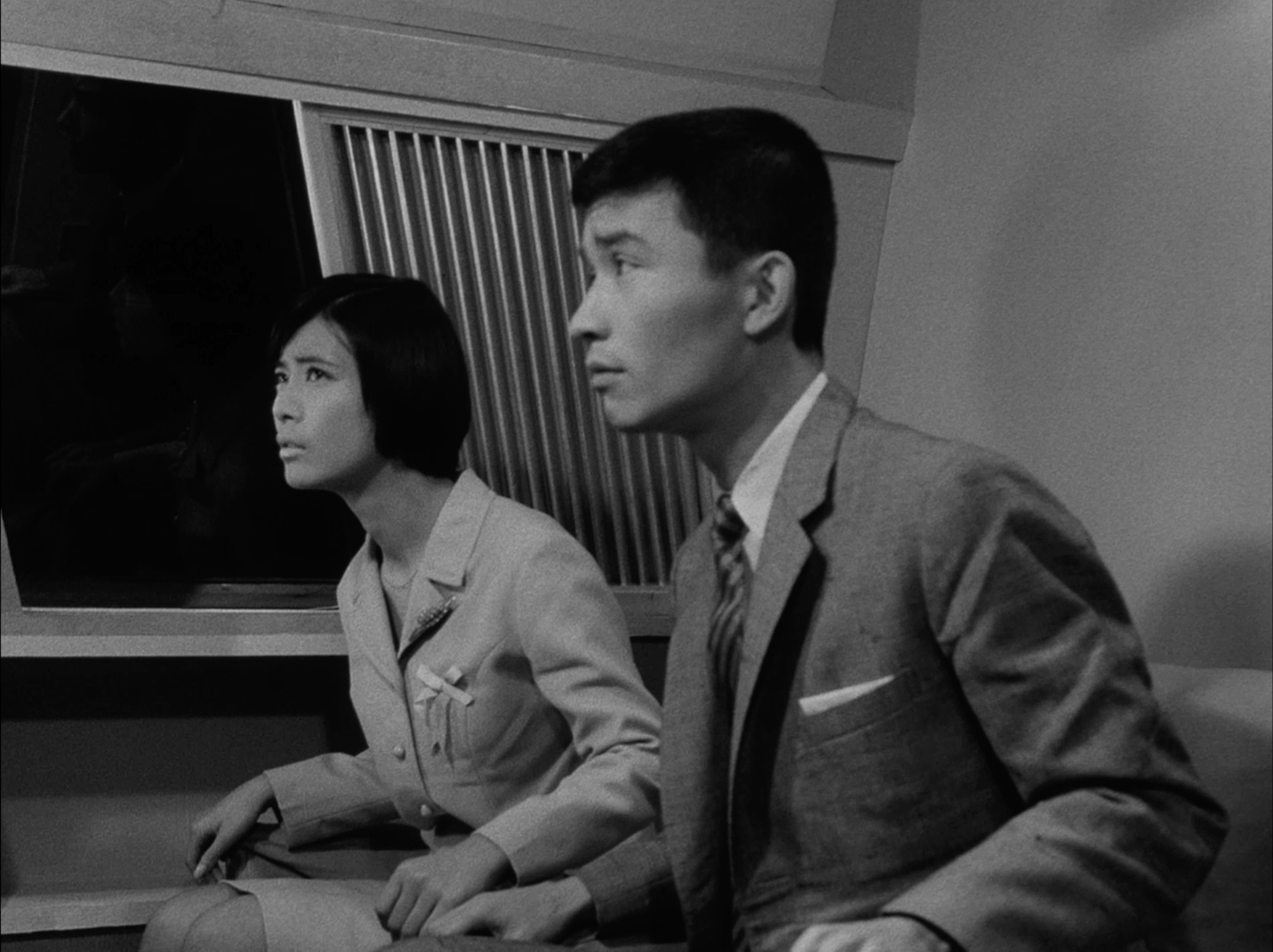
The main trio of the show all make appearances, but they don’t drive the events of the story (except for Ippei accidentally bringing M1 onto the train). Yuriko and Ippei have larger roles than Jun because they’re actually aboard the Inazuma. Jun is stuck outside, unable to do anything. But really, nobody can do anything. Nobody has control of the story’s direction; that’s in the nature of a runaway train story. Everything goes wrong in an escalating cascade of technological and monster-based failures. The characters can only make futile attempts — including two appeals to Buddha — to fix the ludicrous but still dangerous situation.
And it never stops being funny! Intentionally funny: the 1930s Howard Hawks comedy bits, the prattling and ineffective Chief of Operations (Susumu Ishikawa), the gaggle of wiseacre reporters, the streetwise prankster kid straight out of a Bowery Boys movie, the bumbling and ridiculous monster, and so on. Each oddball piece of this episode exists for a reason. The train isn’t under control, but the Tsuburaya team built the best tracks for it to run on right to the end of the line.
As for the end of the line, I won’t give it away, but it’s unquestionably the most bizarre curtain closer in the show’s run. Maybe in all of the Ultra franchise. I will say that the final line of dialogue is one of the great enigmas of Ultra Q: “I am seagull, I am seagull.” (Watashi wa kamome.) These were the words spoken by Valentina Tereshkova, the first woman in space, when she radioed to Earth following her launch in June 1963. “Seagull” was Tereshkova’s call sign. So that’s how the episode signs off. Make of that what you will.
“The Underground Super Express Goes West” had a semi-sequel decades later in one of the best episodes of Ultraman X, “Living Together.” Its story doesn’t fit perfectly with the Ultra Q events, but nothing could.
Rating: Classic
Previous: Baron Spider
Next: Balloonga
 The Ultra Project