
Directed by Samaji Nonagase. Written by Masahiro Yamada. Airdate Jan. 30, 1966.
Here’s a change of scenery, shifting from urban Tokyo to the desolate wastes of Antarctica. There’s another change, which is that Jun is the only member of the regular or semi-regular cast to appear. Without Yuriko and Ippei around to lighten the mood, this is the first episode to completely bypass humor — appropriate for a bleak, tense story set in one of the most hostile environments on Earth.
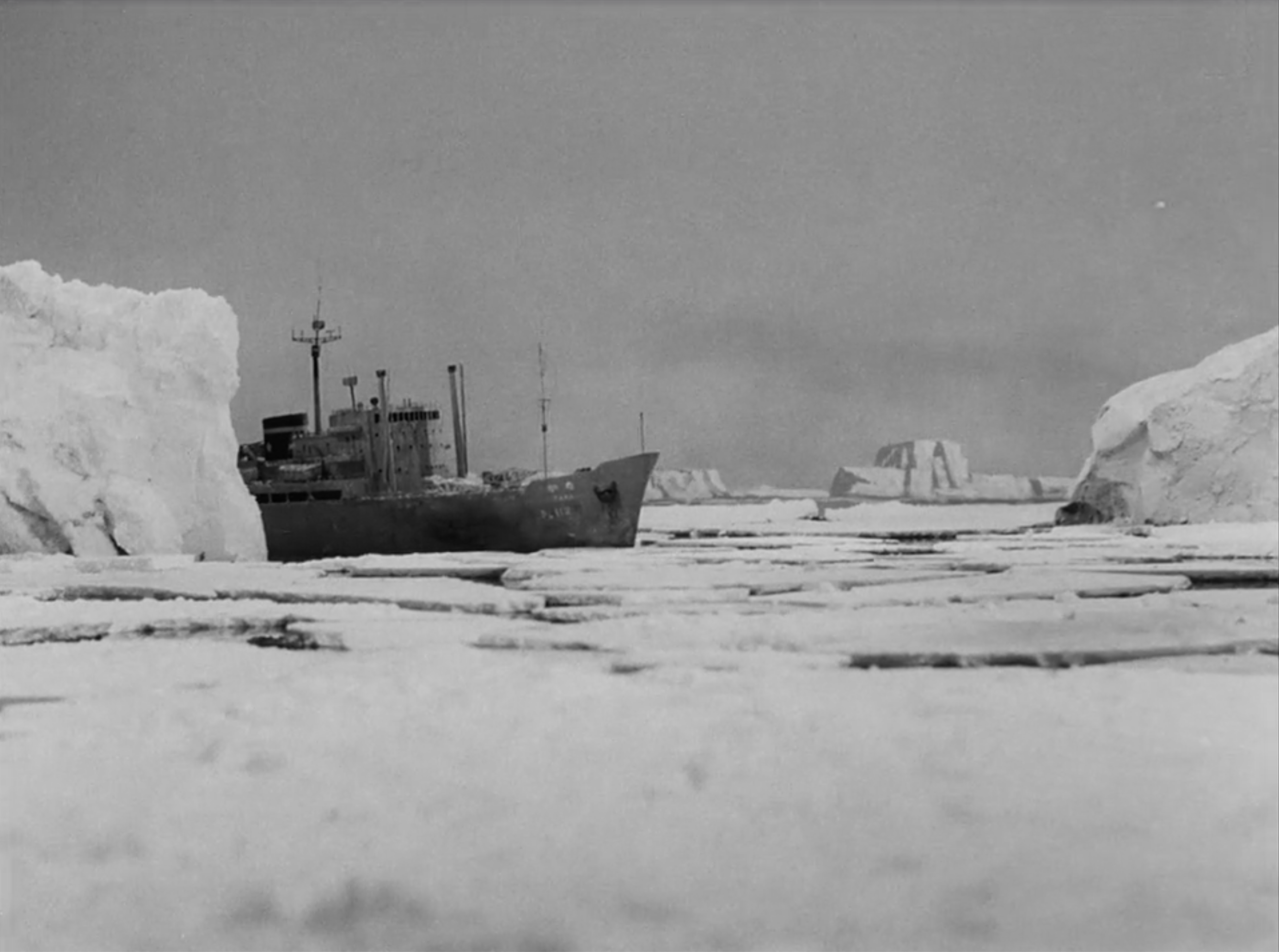
The frozen setting at an Antarctic research base and the ship trapped nearby in the ice recall several Hollywood science-fiction movies set at snowbound bases, notably The Thing From Another World (1951) and the early scenes from The Beast From 20,000 Fathoms (1953). I suspect the biggest influence on “Peguila Is Here!” was a British film from Hammer, The Abominable Snowman (1957), written by Nigel Kneale. Kneale’s Quatermass television serials and their movie adaptations have similarities in tone to several Ultra Q episodes. This one in particular has a strong Quatermass feel: science fiction that’s as sinister and bleak as the Antarctic nightmare-scape.
Jun seems to have picked up Yuriko’s job as correspondent and photographer for the Daily News. Was Yuriko the protagonist in early drafts, but then Jun was subbed in because he’s played by a more famous actor? Yuriko is just as qualified at dealing with the Antarctic as Jun, which is to say that neither has any qualifications to be down there other than possessing a camera. However, the older and more serious Jun matches the story’s dour tone.
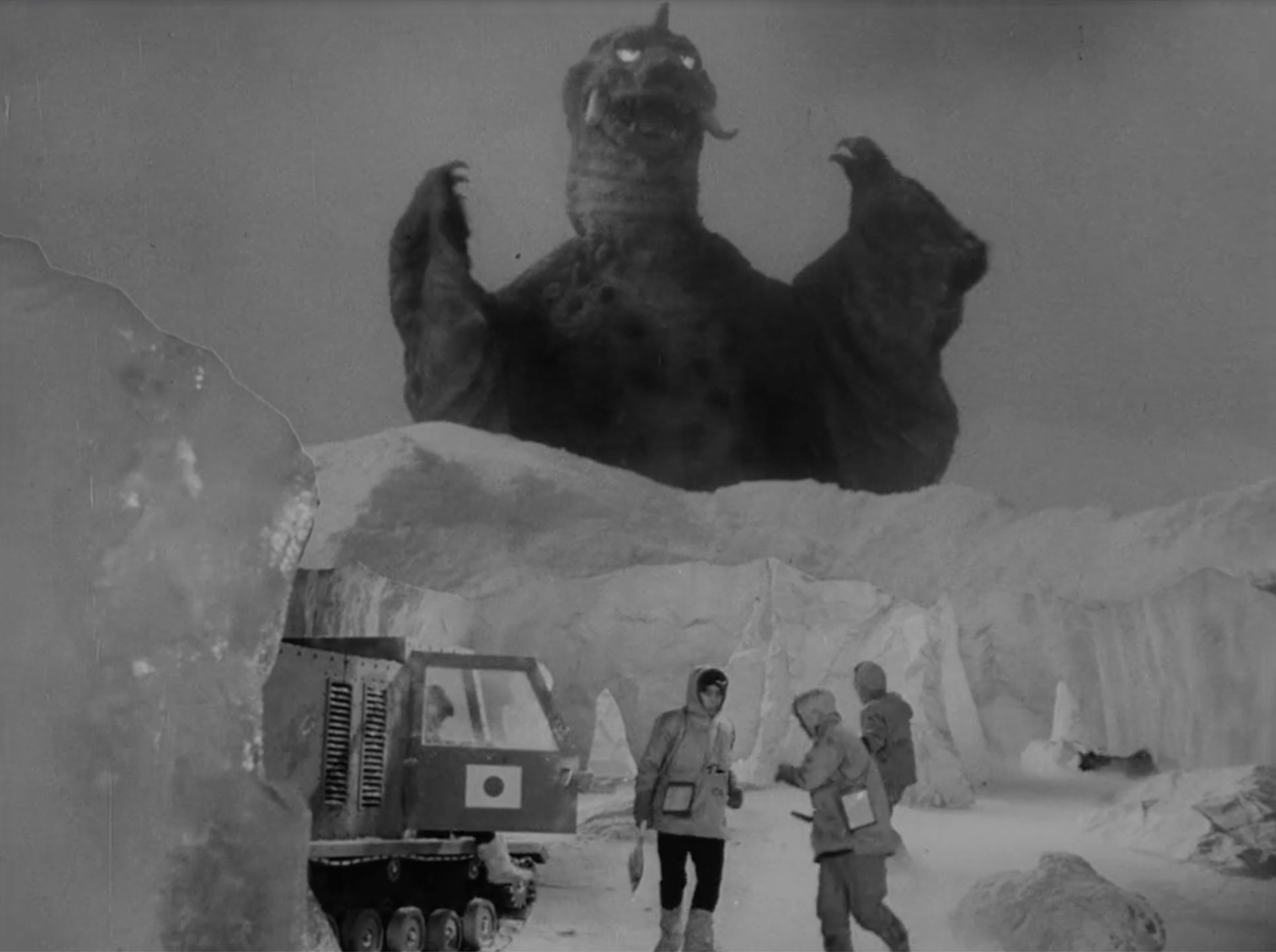
Jun’s specific business at the South Pole is discovering what happened to Nomura, a biologist who vanished from a Japanese polar base three years ago. Nomura’s diary was somehow recovered, though never explained how, and in the pages he mentioned a deadly force known as “Peguila.” Whatever Peguila is (surprise, it’s a giant monster), it has the power to create a cold so intense that it traps Jun’s ship and everyone at the Antarctic base. Peguila can blast a cold ray so powerful that it creates fields of zero gravity. I’m not even going to pretend to understand how that works.
The story must make several large logical leaps to get all the characters trapped in an icy hell where they desperately have to figure out how to defeat Peguila. But any objections I may have are bulldozed by the grim mood, phenomenal production design, and extensive special effects. Simply put, the episode looks fantastic. Everything about this deadly world of ice and snow had to be constructed on soundstages or created with miniature special effects, and as an enveloping experience it’s among the best in the show. This cinematic quality must have stunned Japanese TV audiences of the day who weren’t used to this level of production values on regular broadcasts. The credits sequence alone, showing the ship pushing through a maze of massive ice floes, is a work of art.
Peguila, a sort of hybrid of a walrus and a penguin, is also a winner. Peguila stays off-screen long enough to build up a hovering menace, and it doesn’t let us down when it finally emerges and starts stomping the base and sending snowplows whirling into the air. Peguila’s design is classic early TsuPro and would have no problem fitting into a Toho monster film. Peguila would return to Ultra Q in the episode “Tokyo Ice Age,” where the effects team unleashes the ice kaiju on a cityscape.
Rating: Good
Previous: Mammoth Flower
Next: Grow Up! Little Turtle
 The Ultra Project