
Directed by Hajime Tsuburaya. Written by Tetsuo Kinjo. Airdate Oct. 1, 1967.
Earth is being targeted. Beings from countless stars floating in space have begun a terrible invasion.
These words from narrator Hikaru Urano, spoken over a night scene of a swarm of car headlights on a freeway, set the tone for Ultraseven. Darker than Ultraman, more epic than Ultra Q.
After a mood-drenched opening where a man mysteriously vanishes in his car, the action leaps into an introduction to the TDF base and the Ultra Guard. The audience gets a taste of this well-equipped organization with its weapons and groovy vehicles on high alert in a dangerous world. The narrator reads the roll call for Ultra Guard members Soga, Amagi, Furuhasi, Anne, and Captain Kiriyama as they scramble to answer an alarm call for what appears to be the alien attack they’ve dreaded for years. I’m hooked already!
And yet, this isn’t the best possible premiere episode. For such a great program, Ultraseven has a bumpy first batch of episodes, although it manages to do enough right to keep viewers hanging around through this rough stretch. I’ll get back to what doesn’t click about this first episode, but first I’ll look at what absolutely does work.
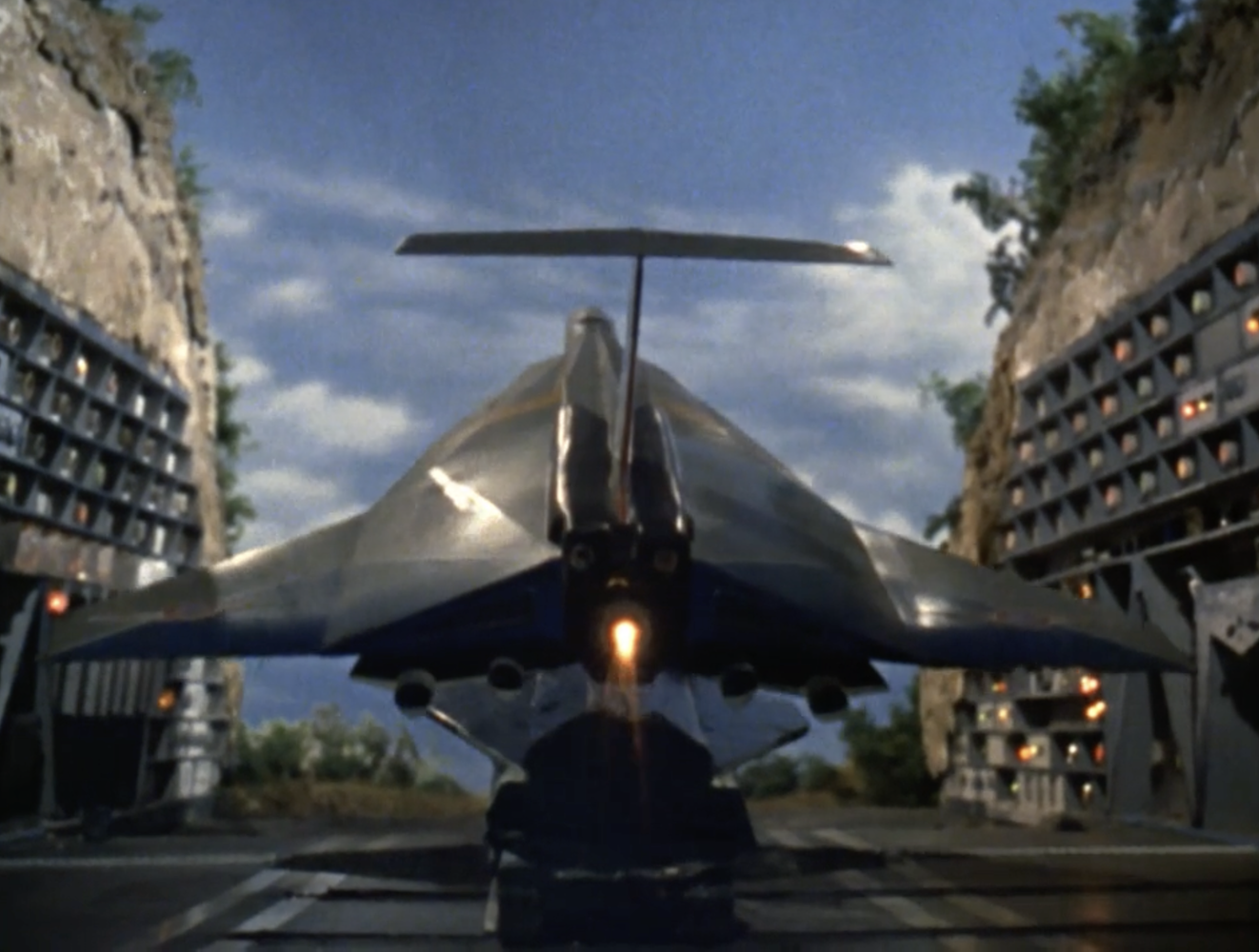
The pacing is lightning fast, sprinting from the weird opening through to the action climax. The Tsuburaya Pro team rapidly lays out as much of the wide scope of this world as possible in the limited space: the extent of TDF’s subterranean base, the cool spy-fi car the Pointer; the multi-stage jet the Ultra Hawk 1; the arrival of the enigmatic Dan Moroboshi; the threat from the first invading species, Alien Cool; a landslide; an intricately choreographed aerial battle; a giant robot; and the first appearance of the superhero Ultraseven. It’s a crazy ride, and the talent of the production team and the effects artists is all on screen.
The highlight is a thrilling aerial dogfight between Alien Cool’s ships and the Ultra Hawk, which can separate into three attack vehicles. Eiji Tsuburaya was showing off his admiration for the British program Thunderbirds right from the start. The effects team goes all-out for the destruction of a large industrial facility. This sequence is produced at a level of spectacle equal to some of Toho’s theatrical films. These VFX set-pieces are gorgeous to watch and show the advantage of returning to shooting in 35mm after Ultraman had to use 16mm.
The music is fantastic from the first note. I only briefly mentioned Toru Fuyuki’s title song, “Song of Ultraseven” (lyrics by Hajime Tsuburaya) in the introduction. It’s a barnburner and the best theme song of the entire franchise. The heroic fanfare for the main title, the magnificent march with the chant “Seven!”, and then the mixed choir of children and adults singing a joyous hymn to space adventure — it amps me up each time I hear it. Seven! Seven! Seven!
So, what makes this only a partially successful episode? One with an effective hook for a premiere, but which doesn’t hold up against the majority of later episodes?
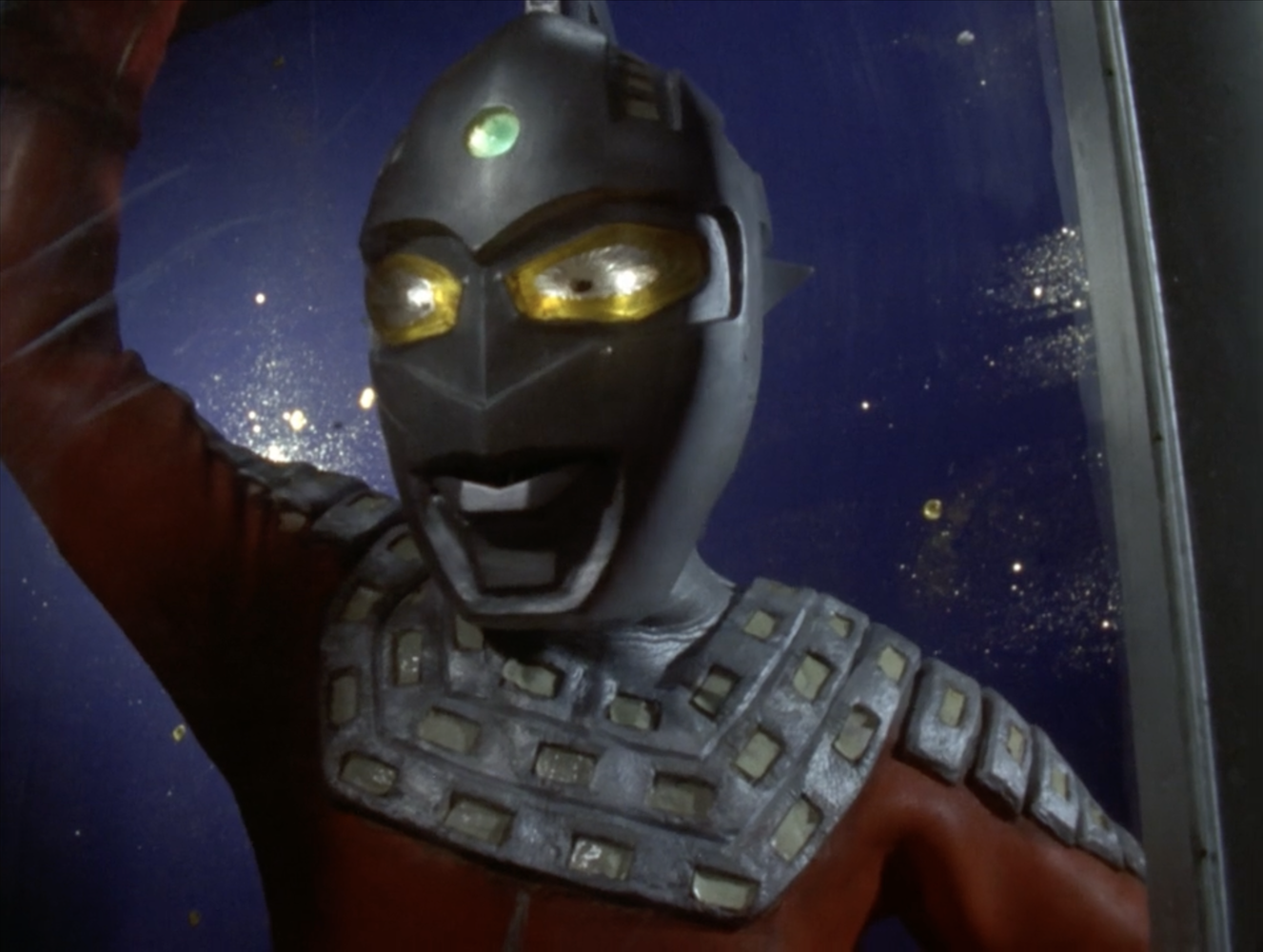
The main trouble is the headline character. Ultraseven makes only a short appearance in the last three minutes to easily defeat the inappropriately named Alien Cool. Ultraseven’s brief screen time has him mostly at human size, and he doesn’t do much. Even the first use of his signature weapon, the awesome Eye Slugger, is rather flat.
Ultraseven’s human form, Dan Moroboshi, makes a meager first impression. He’s a drifter who abruptly pops up and hands the Ultra Guard advice to beat Alien Cool, then gets accepted as a member. It’s just too rushed. (How Ultraseven came to use this specific human disguise is something for a later episode.)
I understand why Tsuburaya Productions underplayed Ultraseven like this: they wanted to establish that the new program wouldn’t follow the formula of always ending with a giant monster fight and that its alien hero would take on a smaller role. The other effects get more attention. But the show still has to survive on Ultraseven and his abilities, and we don’t have much to grasp onto here.
Trying to cram in the capsule monsters doesn’t help. Windom, a gawkish capsule monster robot who resembles a Jim Henson creation, has about 30 seconds of basic incompetence fighting Alien Cool ships before Dan recalls it. Poor Windom: this is its standard MO, although it will eventually become at least a lovable incompetent. The capsule monsters should’ve waited at least an episode before their introduction so there’d be more time to explore what they are. Oh well, in the long run they aren’t that important.
As far as alien schemes go, Alien Cool hasn’t hatched anything special. It’s collecting people as hostages, it makes some threats, the Ultra Guard with Dan’s help figures out how to defeat its invisibility power, and then they mop up Alien Uncool. It’s sufficient for the episode, but it’s not much of a story. There’s far better ahead.
Even with these faults, “The Invisible Challenger” hits its goal of establishing the tone, style, and effects of the new show. Intelligent science-fiction plotting and better Ultraseven action is yet to come, but I have to imagine viewers 1967 were excited to see more.
Rating: Average
Previous: Ultraseven: An Introduction
Next: The Green Terror

 The Ultra Project