
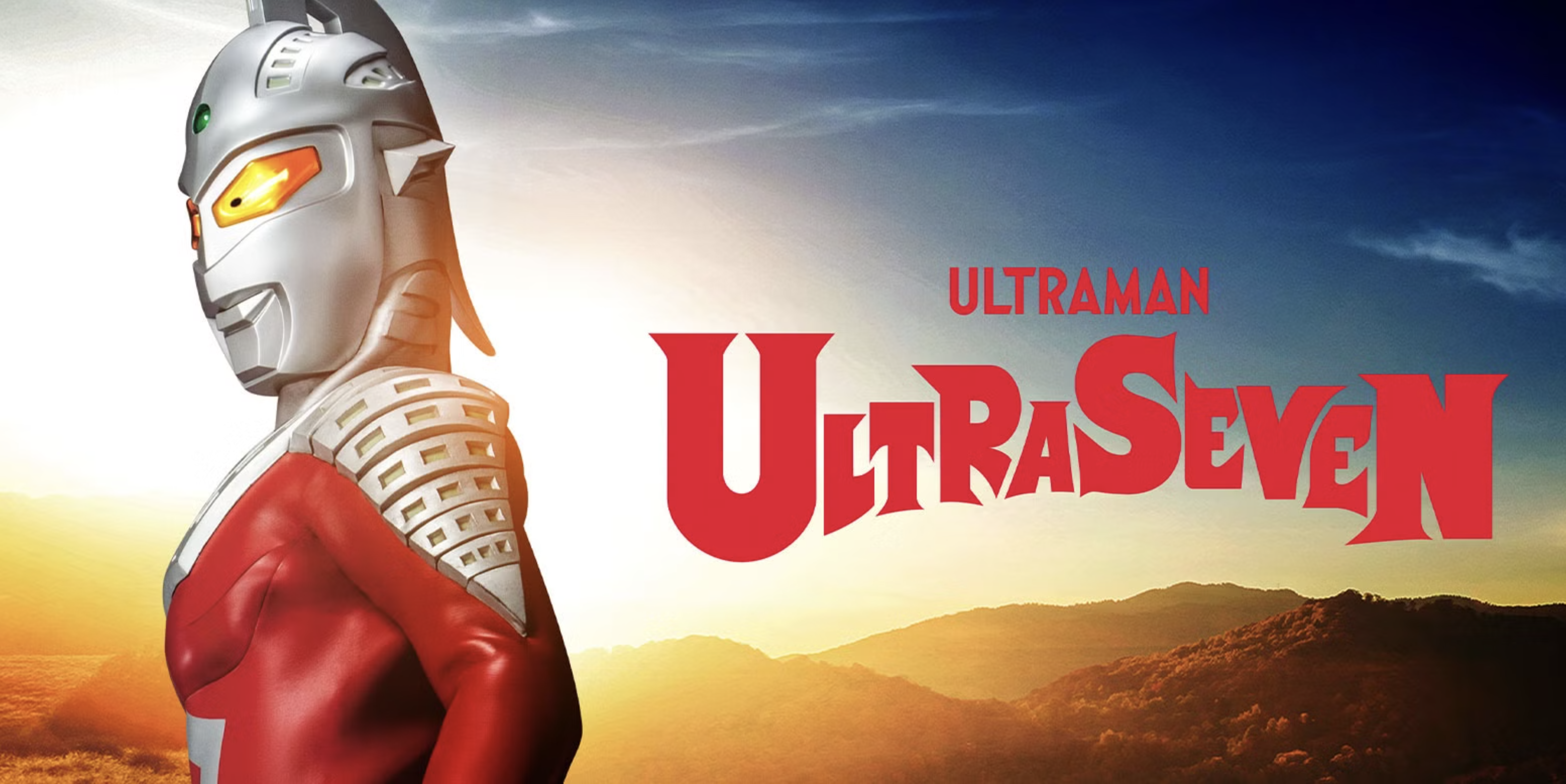
Ultraseven is the last of the “original” Ultra trilogy, following Ultra Q and Ultraman. They were not intended to take place in the same universe, and Eiji Tsuburaya planned for Ultraseven to be the end of this unofficial “Ultra” series so his company could move on to different special effects programs. The trio only became part of the same continuity after Return of Ultraman debuted in 1971.
Eiji Tsuburaya’s genius links these shows together and gives them a special aura and appreciation in the long history of the franchise. Ultraseven was the last Ultra show Eiji-san worked on: he died in January 1970 at age 68.
In a 2016 poll of Ultra fans, Ultraseven’s final episode was voted the best of any of the Ultra shows. That’s no surprise: Ultraseven is generally the most highly regarded program in the franchise. Ultraman brought in young fans, but Ultraseven pulled in the adults who would come to embrace all the shows — and stay with them. Its combination of special effects ingenuity, intelligent science-fiction writing, and often poignant social commentary have given Ultraseven a special place in the Ultra Pantheon.
Beginnings
The smash success of Ultraman meant TBS was all in for another Tsuburaya Productions show. The network expected something like Ultraman. Their sponsor, Takeda Pharmaceutical Co., was pushing for a program to attract an adult audience, as well as something with a stronger science-fiction angle. This was the direction Eiji Tsuburaya was already heading: he’d become interested in espionage and science-fiction shows and particularly admired Gerry and Sylvia Anderson’s British program Thunderbirds. He wanted to create something similar, with numerous futuristic vehicles and science-fiction bases. Tsuburaya was also interested in more intense character dynamics, which would fit with the adult approach.
Eiji Tsuburaya again worked with writer Testsuo Kinjo to develop a program titled Ultra Guard. The original pitch for the show took place in the near future (1999) on a satellite station where astronauts served as Earth’s line of defense against alien invaders. Kinjo continued to refine the story when TBS asked for changes, adding a superhero and the concept of Earth using friendly monsters against alien invaders. The program became known as Ultra Eye after the hero’s transforming device. Eventually, the title was changed to Ultraseven, reflecting that Dan Moroboshi — the human form of the alien hero — was the seventh member of the Ultra Guard.
The new show focused exclusively on intelligent alien menaces rather than terrestrial giant monsters and shifted the VFX focus away from “Ultra vs. Giant Foe” battles to feature more science-fiction equipment and vehicles. Ultraseven could change to giant size, but wouldn’t always need to, allowing for differences in the scale of the action (and a way to lower the budget). Ultraseven would still have plenty of giant monster fights, but science-fiction storytelling would take precedence and the monster smack-downs wouldn’t always be the highlight or climax.
Most important of all, Eiji Tsuburaya gave Testsuo Kinjo and the other show writers the freedom to tackle social issues and big topics. There were scripts dealing with genocide, racism, nuclear power, fascism, poverty, and political assassination. Similar to Star Trek, a show running on US television at the same time, Ultraseven combined serious topical themes with colorful science-fiction adventure.
A new composer, Toru Fuyuki, came onboard, replacing Kunio Miyauchi and his jazzy-pop style. To match Ultraseven’s tone, Fuyuki created a more orchestral and epic sound with a powerful new theme song and a thrilling march for the Ultra Guard that sounds similar to Akira Ifukube’s marches from Toho’s SF classics. Fuyuki’s music continues to be immensely popular among fans and has even gotten its own concert.

The Ultra Guard & Capsule Monsters
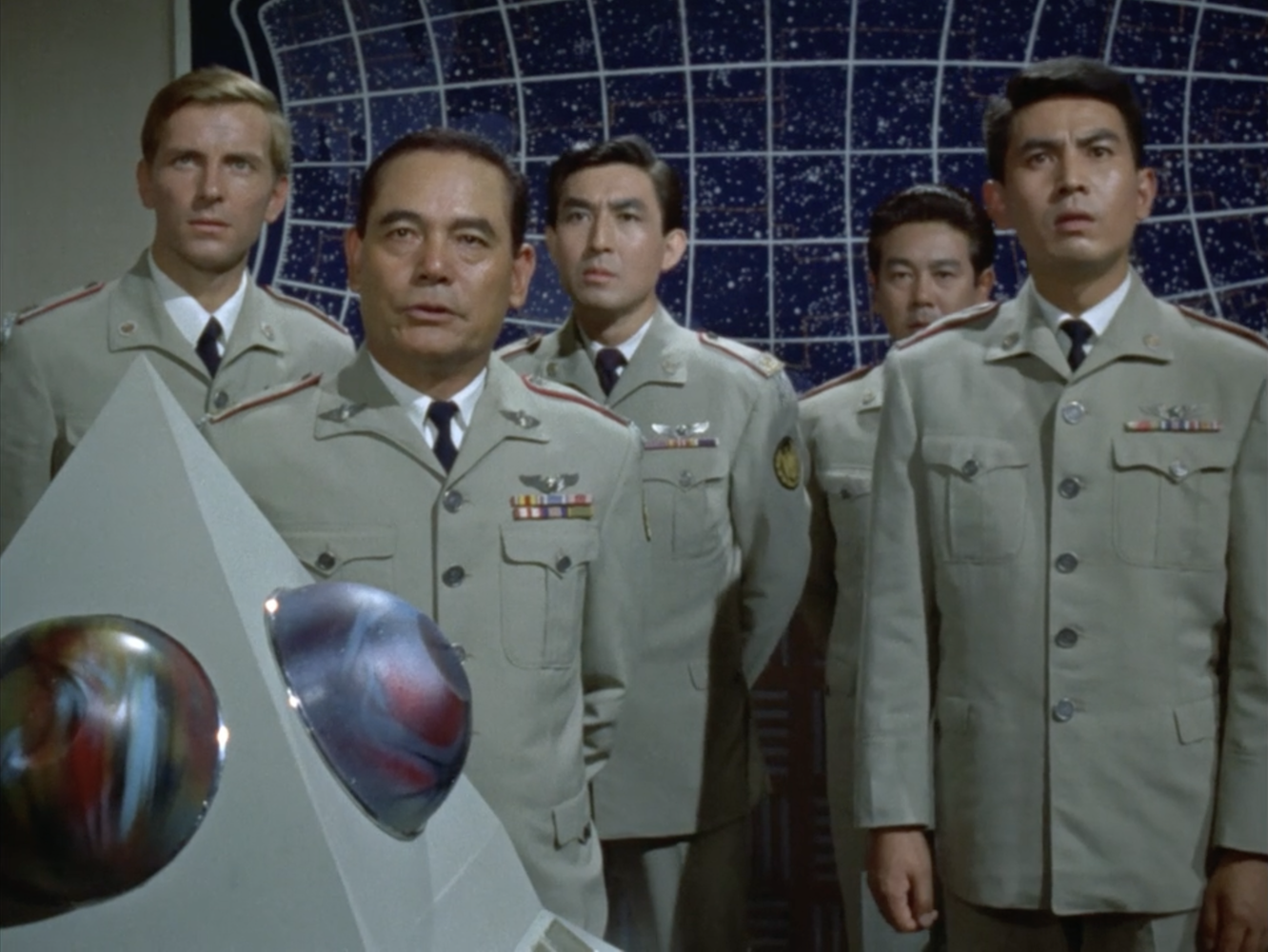
The Ultra Guard is a more active and militaristic organization than the Science Patrol from Ultraman. The Ultra Guard is a division of a larger organization, the Terrestrial Defense Force (TDF), that has extensive resources, technological developments, and vehicles in their underground headquarters. The Ultra Guard and the TDF are on constant alert against the alien invasions that seem to target Earth every week.
Although Ultraseven aimed for more human drama, the actual crew of the Ultra Guard doesn’t have as much personality as the SSSP in Ultraman. They aren’t a bad bunch, and they do grow on you, but they don’t have the same quirks that make them stand out and there’s no overt comedy character. This gels with the more serious nature of Ultraseven, but it created a pattern for the rest of the Showa era where the defense teams never recapture the appeal of Ultraman.
The narrator kindly lays out the members of the Ultra Guard in a montage in the first episode:
- “Captain [Kaoru] Kiriyama, Age 38. Sixteen years of service. Born in Tokyo.” Kiriyama is a taciturn man of duty who is wise past his years, the quintessential “good commander.” Played by Shoji Nakayama.
- “Soga, Age 25. Three years of service. Born in Kyushu.” He’s the “shooty guy,” and takes on part of the gruff, sometimes antagonistic character. Played by Shinsuke Achiha.
- “Furuhasi. Age 29. Seven years of service. Born in Hokkaido. The strongest member of the TDF.” Here’s our returning cast member from Ultraman, Sandayu Dokumamushi, playing a character close to Arashi but also pitched as the “comic relief” — a much milder comic relief than Ide in Ultraman because of the type of show this is.
- “Amagi. Age 24. Two years of service. Born in Nagoya. Expert planner.” Played by Bin Furuya, also returning from Ultraman, where he played … Ultraman. Yes, the stunt performer who was actually in the suit. Amagi is the least developed of the Ultra Guard, but Furuya has a winning presence, and Amagi often seems legitimately frightened and nervous about the threats the Ultra Guard faces, which is a good contrast to his more stoic companions.
- “Anne [Yuri]. Age … pardon me. Two years of service. Born in Tokyo. Sole female member of the Ultra Guard.” (There’s a weird “we don’t say a lady’s age” bit. The ‘60s, folks!) Anne’s the Ultra Guard’s medical specialist, and one of the better female defense team members. Played by Yuriko Hishimi.
Finally, there’s the titular hero, Ultraseven, who adopts the human identity of Dan Moroboshi. Dan is an improvement over Shin Hayata as a protagonist. He’s more passionate about his role, and it helps that he actually is Ultraseven, not a human host for an Ultra. Dan has a genuine love-interest relationship with Anne that subtly progresses over the show.
The TDF upper brass make several appearances and include recurring guest stars Kenji Sahara (Staff Officer Takenaka) and Akihiko Hirata, Toho regulars who were seasoned veterans of the Ultra series.
One big idea for Ultraseven that never reached its potential is the capsule monsters. In situations where Dan Moroboshi can’t easily turn into Ultraseven or needs a distraction, he can pull out a capsule that releases one of three different giant monster allies, a very proto-Pokémon idea. Dan uses one of the monsters in the premiere episode, suggesting they’ll be a regular feature. But Dan’s monster buddies only make sporadic appearances, as if the writers forgot about them. No source I’ve found has a good explanation for why the capsule monsters got sidelined. I suspect it was a combination of budget concerns and the writers finding the capsule monsters awkward to fit into scripts.
Success, Slide, and Return
Ultraseven stormed onto Japanese airwaves in October 1967, and like the previous two Ultra shows, it was an immediate ratings hit. It pulled in older viewers as the network and sponsor had hoped. However, its success began to ebb away in the second half of the 49-episode run. Many children stopped tuning in, and ratings began to fall even as the adult fans remained loyal and critics heaped accolades on it. The kaiju craze of the ‘60s was starting to die down, and Toho even attempted to conclude the Godzilla series with Destroy All Monsters in 1968. Ultraseven was caught in this downturn, and it was also competing against other tokusatsu television shows.
But Ultraseven had a return a few years later, similar to the original Star Trek’s resurgence in syndication. Like Trek, Ultraseven had mature science-fiction fans as its biggest supporters. Ultraseven has been an important continuing hero figure in the Ultra franchise, and there have been several revivals: the direct-to-video Heisei Ultraseven (1994–2002) and the mini-series Ultraseven X (2007).
Seven! Seven! Seven!
You’ve probably figured out by now that I love Ultraseven. It’s my favorite of the Ultra shows I’ve seen so far, and I doubt that will change.
I like to describe the show to people who haven’t seen it as a combination of Godzilla, Superman, and Star Trek: giant monsters and extensive modelwork special effects, an alien superhero in disguise on Earth fighting the good fight, and serious science fiction stories in a futuristic setting. Ultraseven absolutely lives up to the expectations of that triple-header. Not in every episode of course, but at its best, Ultraseven has some of the smartest and most exciting science-fiction television I’ve ever seen. It has a bit of a rocky start, but the second half of the 49 episodes contains an embarrassment of riches.
A final bittersweet note: Ultraseven was the last Ultra show for several key creative people. Of course, there’s Eiji Tsuburaya, who died in 1970. Tohl Narita, the designer who created Ultraman, Ultraseven, and most of the monsters and aliens of the first three shows, departed Tsuburaya Productions in the middle of Ultraseven over creative differences. Tetsuo Kinjo, the brilliant writer who served as the head of Tsuburaya’s literary department and wrote many of the greatest episodes, moved back to his birthplace of Okinawa in 1969 after the US occupation ended and the island was returned to Japan. He turned to writing for the stage, and penned only one further Ultra episode for The Return of Ultraman. Kinjo died in an accident in 1976. I’ll have much more to say about Kinjo and the perspective and social commentary he brought to the Ultra series when looking at his episodes. Ultraseven was where his writing and humanity shone the brightest.
Next: The Invisible Challenger
 The Ultra Project