
Directed by Hajime Tsuburaya. Written by Testuo Kinjo and Shinichi Sekizawa. Airdate July 17, 1966.
Unlike Ultra Q, which has no introductory episode and drops viewers into the middle of its premise, Ultraman begins with an episode that establishes its formula and explains its alien hero, the Science Special Search Party, and their various tools of the trade. It fits this all in the space of a half-hour span while still finding enough time for action and a fight with a big monster. That’s a lot to do, and while “Ultra Operation No. 1” isn’t the strongest episode of the series, it checks off all the boxes it needs to and leaves viewers ready to see more.
Thanks to the helpful narrator (Koji Ishizaka, returning from Ultra Q), audiences are quickly introduced to the SSSP and its mission to “investigate strange incidents and anomalies and protect Earth from any invasion from space.” While flying a Jet VTOL on patrol, SSSP member Shin Hayata investigates two glowing spheres pursuing each other near Mount Ryugamori. Hayata’s jet collides with the red sphere, but he is saved from death — or maybe resurrected from death; it’s unclear which — by the alien piloting the sphere.
The alien explains he’s from Nebula M78 and was chasing a dangerous fugitive creature, Bemular, when he crashed into Hayata’s jet. The alien informs Hayata that he will now become one with him and work for peace on Earth. (The alien gives a deep, sinister laugh during his speech, which strikes a odd chord compared to everything else we’ll learn about the Ultras. You’d almost expect the Ultra warrior is plotting something sinister.) Hayata emerges with the ability to transform into the giant form of the alien, whom he names “Ultraman,” for brief periods using a pen-shaped device called the Beta Capsule.
Thus we have our series premise. We also have plenty of questions about the exact relationship between Hayata and Ultraman. Has Ultraman taken full control of Hayata’s body? Does Hayata maintain control in human form and only surrenders it when transforming? Or is there a mix between the two? The final episode of the show suggests one answer, but fans continue to debate the question, and later shows have juggled different methods of showing the connection between a human host and an Ultra.
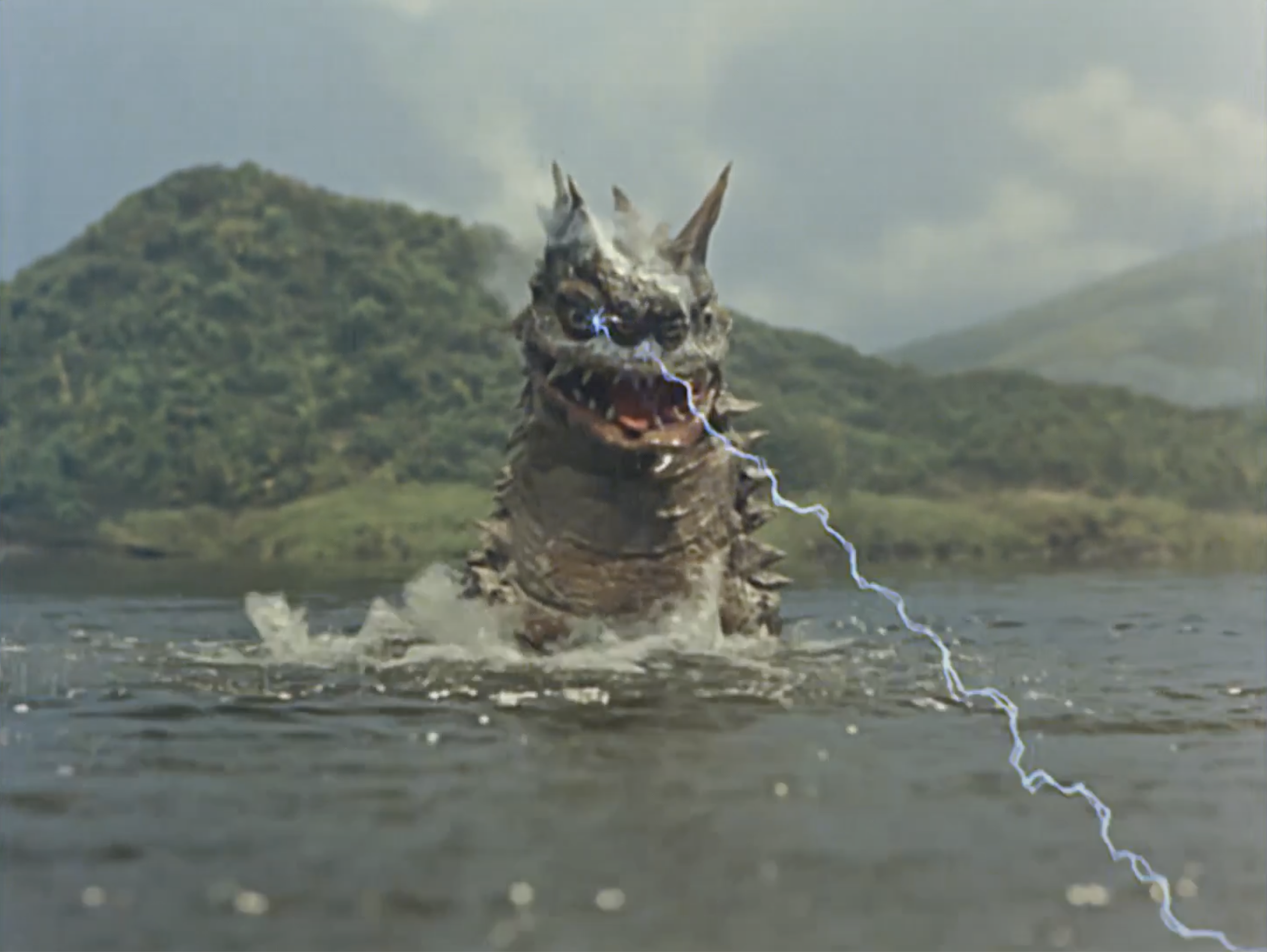
Space Monster Bemular is famous as the first kaiju Ultraman ever fought, but isn’t otherwise impressive with its baggy-legged costume. Like much of what’s in the episode, Bemular gets the basic job done of setting up the formula for better versions to come. The special effects team has plenty of opportunities to show off their impressive work with miniature vehicles, laser effects, and underwater sequences. The full contact fight between Ultraman and Bemular establishes Ultraman’s sumo-style combat, emphasizing grapples and throws.
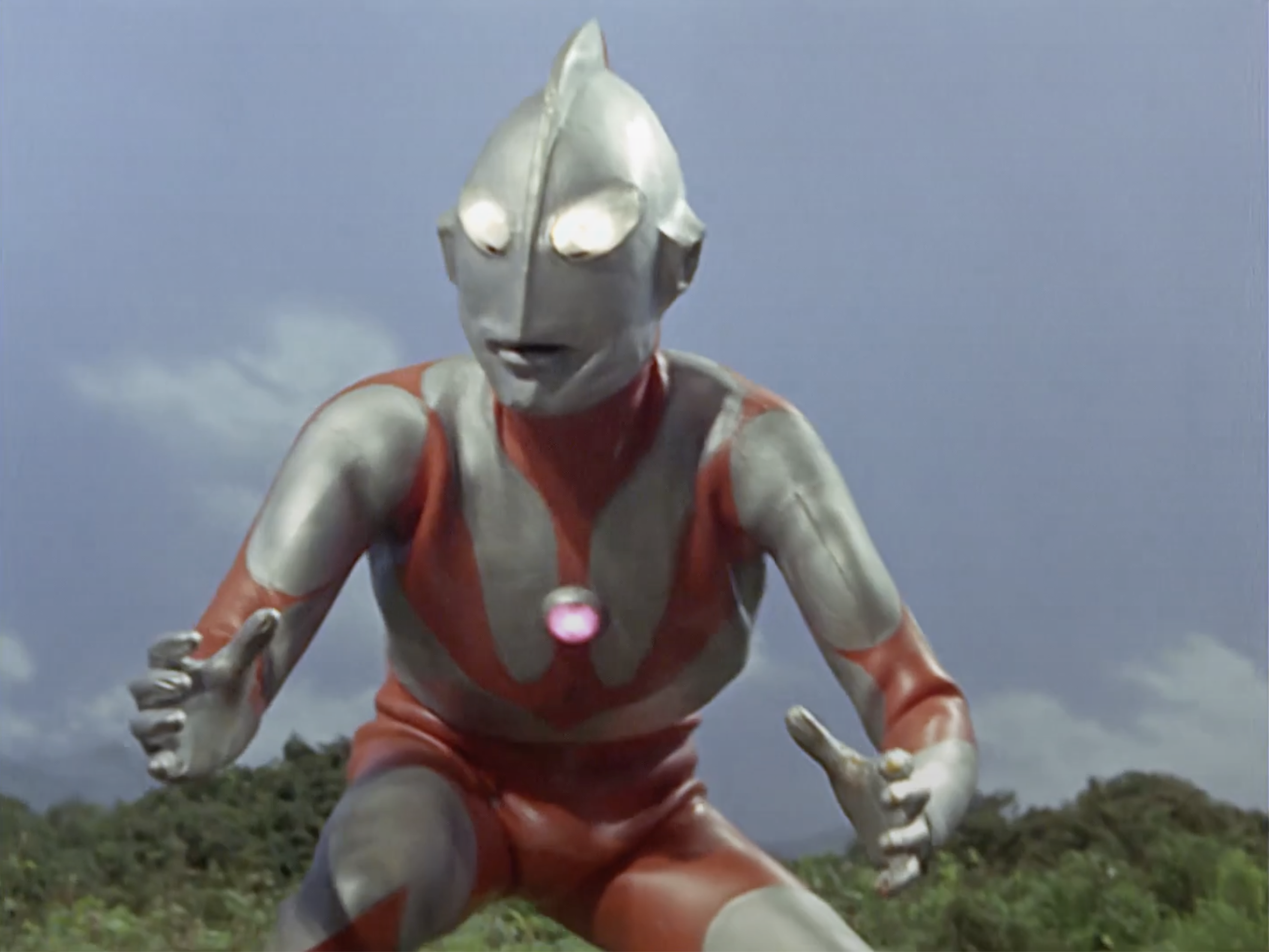
Ultraman has the rougher look he’ll keep until “The Pearl Defense Directive,” with a mask with softer edges and lumps that seems to suggest an actual alien’s face rather than a metallic covering. Tsuburaya Productions would soon discover a sleeker design worked better for the character, but there’s something fascinating about the semi-organic look Ultraman started with.
With all that has to happen in this opening episode, there’s room for only a few moments of characterization from the cast. Captain Murmatsu smokes a pipe to look like a wise elder. Good enough for the moment. Ide doesn’t get too many comic bits, but he’s already showing how seriously he takes his job. He gets saddled with a ‘60s sexism line when says that Fuji may be a member of the Science Patrol, “but she’s still a girl.” Fuji overhears this and snaps right back at him, softening the blow a bit. Fuji thankfully doesn’t remain stuck at HQ running communication equipment but gets out into the field to deliver the S-Submarine 16 to the lake. Young Hoshino pops up at HQ, promising regular appearances that don’t become as regular as planned, but he’s there for as a stand-in for the kids watching the show.
“Ultra Operation No. 1” gets the new show, as well as the core formula of much of the rest of the franchise, off to a solid start. It has enough colorful action to hook viewers to come back next week, but it’s watchable mostly for its historical value. The Tsuburaya Pro team would need more time to get settled in and fine-tune the formula and find ways to depart from it.
Rating: Average
Previous: The Birth of Ultraman
Next: Shoot the Invader
 The Ultra Project