
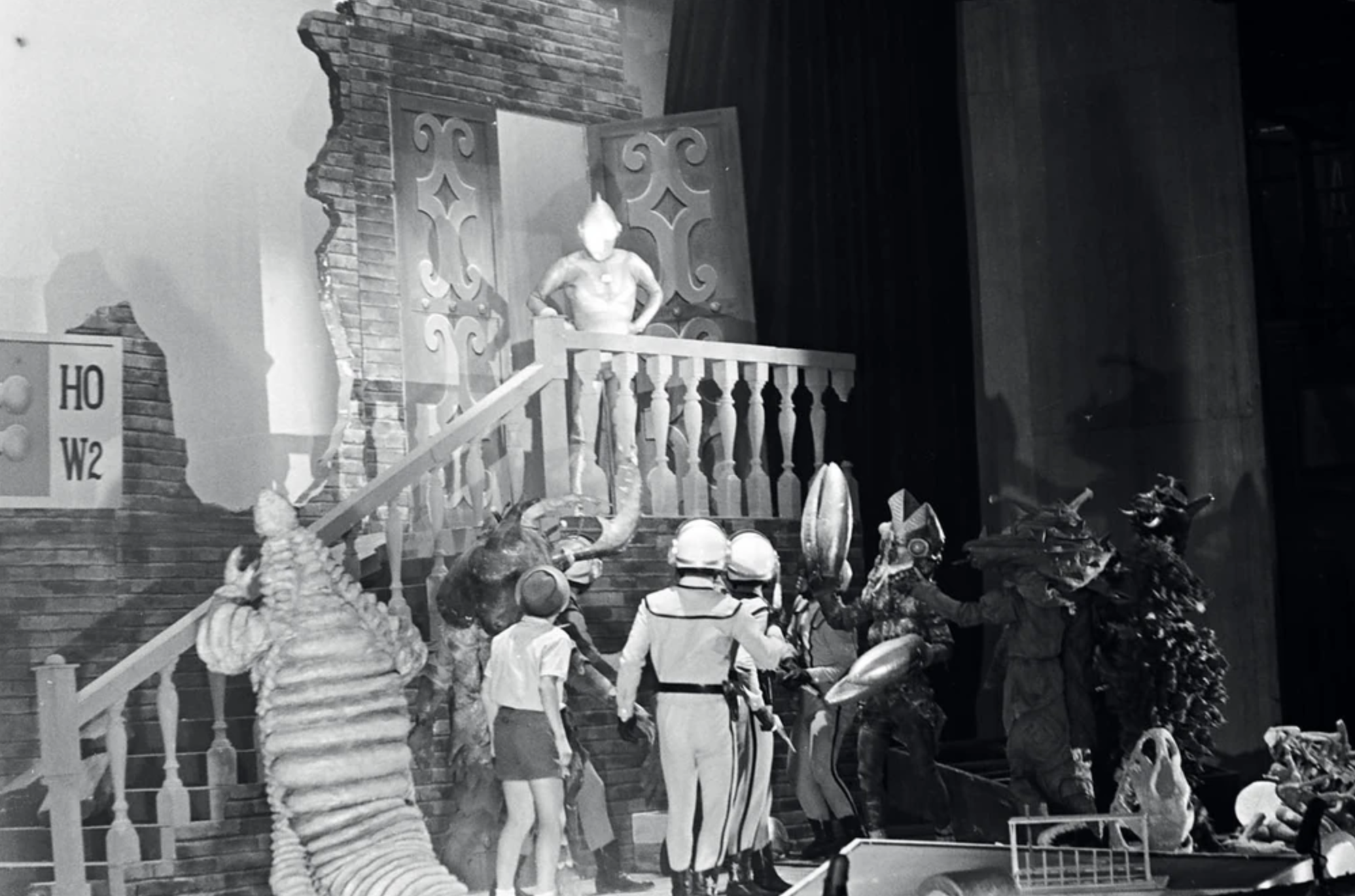
Directed by Akio Jissoji. Written by Tetsuo Kinjo. Airdate July 10, 1966.
We have to start here — I write with some embarrassment for the poor Tsuburaya Productions team. This “pilot” episode for Ultraman is just a live stage show taped in black-and-white to promote the actual show debuting the next week. “The Birth of Ultraman” exists because Tsuburaya Pro desperately needed more time to finish episodes before the premiere date of Ultraman, and this was the quickest way for the Tokyo Broadcasting System to get something on the air to create a buffer. TBS could have gone ahead and broadcast the last remaining episode of Ultra Q, but because it wasn’t a monster-centered episode, they delayed it for over a year and a half to leap right into … this.
A major part of the modern Ultra franchise is live stage shows with extensive practical effects and intricately choreographed fights. I’ve never seen one of these live shows, as they’re a phenomenon restricted to Japan and other Asian Pacific countries, but they’re big moneymakers. “The Birth of Ultraman” is technically the first live Ultra stage show, although I doubt it was what inspired the later ones. Except maybe inspiring them on how to do it better.
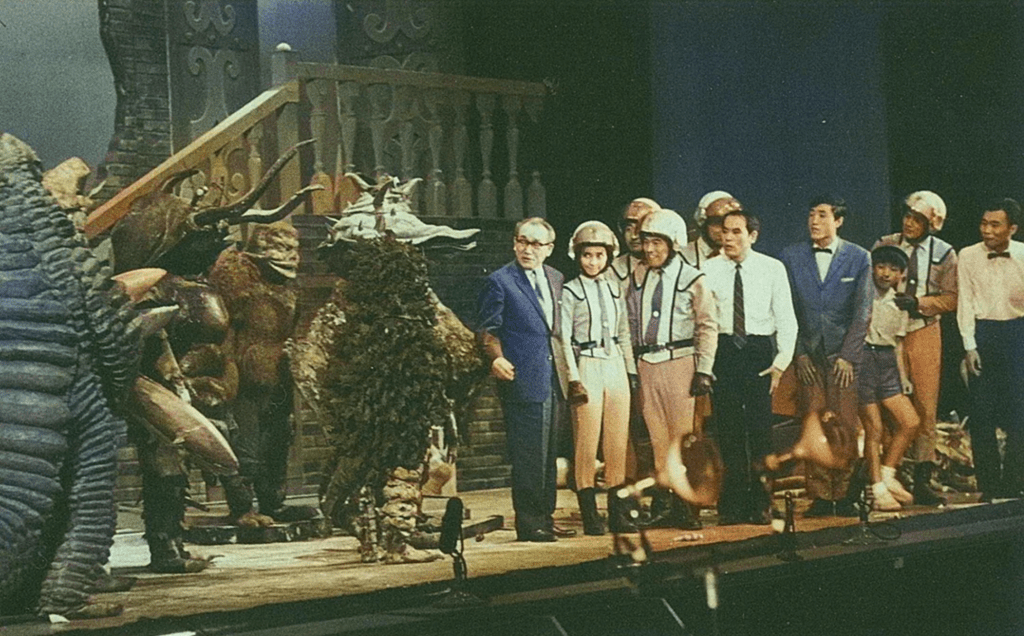
Shot live at Suginami City Hall in front of a crowd of restless and often baffled children (one sticks his tongue out at the camera), “The Birth of Ultraman” has a loose plot about Eiji Tsuburaya (played by actor Akio Tanaka) working from his Monster Manufacturing and Research facility. Comic thieves looking to steal a monster to show to their kids accidentally unleash several Ultra Q kaiju (Kanegon, Garamon, Peguila, and M1) and a few of the completed Ultraman kaiju (Red King, Alien Baltan, and Antlar, whose costume is on backwards). The kaiju sally forth for a messy slap fight as the stunt performers struggle to see out of their costumes.
The Science Special Search Party arrives, and the actors kindly introduce themselves. At last, Ultraman enters to tepid applause, then kicks and punches the monsters for about a minute. Finally, the real Eiji Tsuburaya gets up from the audience to replace the imposter, and everything wraps up with a performance of Kunio Miyauchi’s theme song and a tag for the first episode, reminding people to tune in next week for “Ultra Operation No. 1.”
A few interesting bits of info pop up. We hear the SSSP theme sung with lyrics, something that never happens in the actual show. We learn that the Science Patrol has no connection to the Japanese Self-Defense Force, and Ultra Q is described as “the world where the monsters live,” which seems to indicate the two programs are linked even though this was never the plan. The actors introducing themselves in character is good setup, and they call Hoshino their “mascot.” Fuji takes a moment to remind everyone she’s played by the same actress from Ultra Q. It’s a legitimate thrill to see live footage of Eiji Tsuburaya himself, although he’s mostly quiet and not that comfortable with performing.
The whole affair is sloppy, silly, cheap, and a touch embarrassing to watch. Poor Garamon’s head gets knocked clean off when Ultraman punches it, and the performers talk over each other in a jumble like a live performance of a Robert Altman film. There isn’t even that much Ultraman, and he doesn’t make a heroic impression. But the special did its job of getting Japanese viewers interested in tuning in to see what Ultraman would really look like next week. The short clip shown from episode 3, “Science Patrol, Move Out,” sure looked impressive, and the actual show was going to be in color!
If you’re a hardcore Ultra completist looking for a few bits of lost lore, or if old TV variety show wackiness appeals to you, you might want to dig this up and take a look. Everyone else can skip a week ahead to where it really starts.
Rating: Poor
Next: Ultra Operation No. 1
 The Ultra Project