
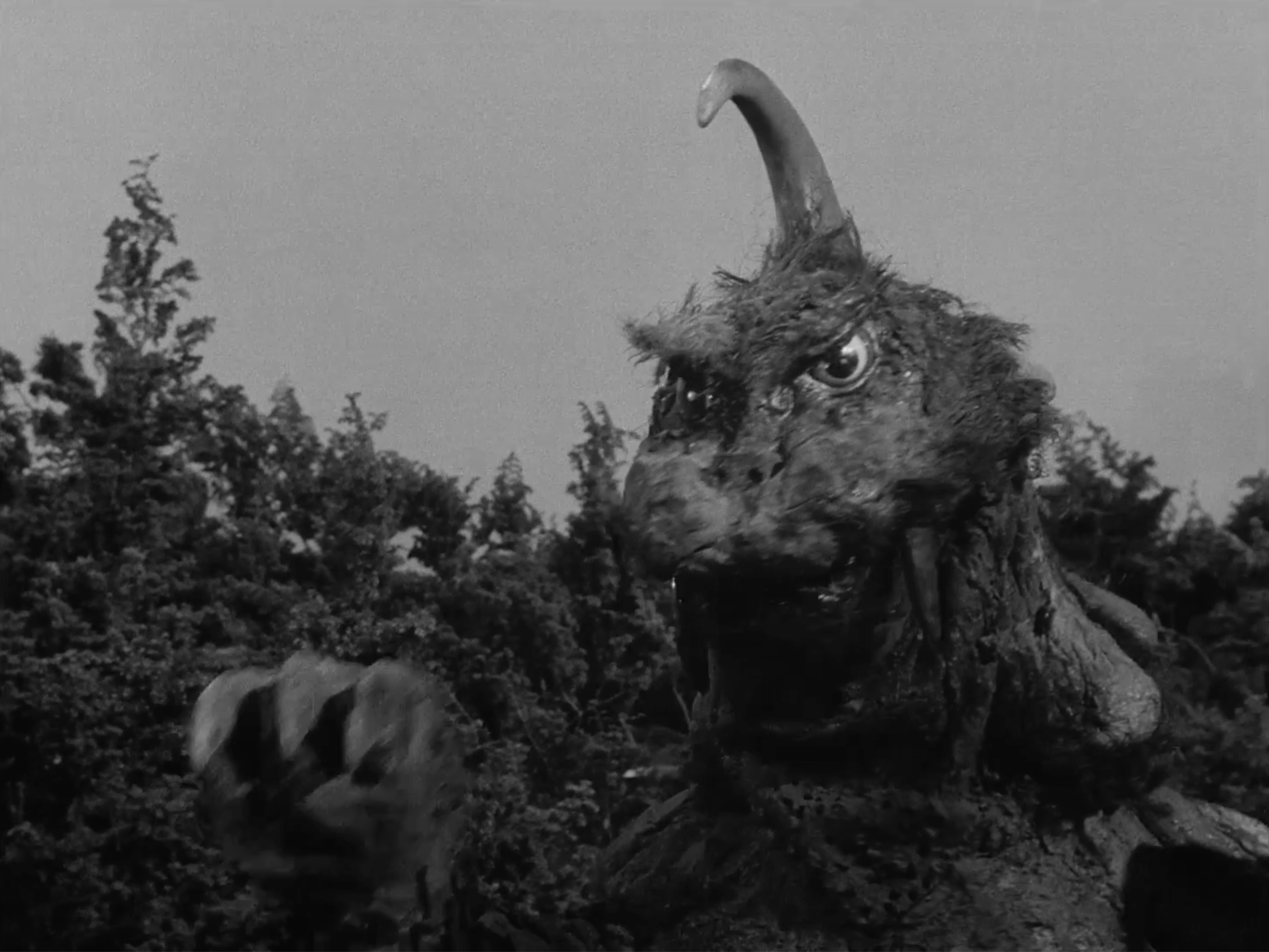
Directed by Hajime Tsuburaya. Written by Toshihiro Ijima (writing as Kitao Senzoku). Airdate Jan. 2, 1966.
It’s the first Sunday night of a new year. You switch on the TV at 7 p.m. to the Tokyo Broadcasting System to check out the premiere of a new program from that special effects guy who does those monster flicks. You hear the sounds of eerie groaning and metallic squealing as mysterious swirls coalesce into the title “Ultra Q.” Then comes the deep, Serling-esque voice of Koji Ishizaka…
This is a terrifying world where everything is unbalanced. For the next 30 minutes, you will experience a parting of mind from body, and become swallowed in this mysterious time…1
Welcome to Ultra Q! And welcome to the first day of a science-fiction and fantasy television empire that will re-landscape Japanese pop culture — and the pop culture of many other parts of the world.
Ultra Q had completed production of its full slate in December 1965. TBS had 28 episodes to pick from when choosing which to air first. They went with the 12th produced episode, “Defeat Gomess!” A good choice. It’s not the finest half hour of the show, but if you want to bust through the doors and wow viewers with the thrills of a 30-minute giant monster movie, it has instant appeal and is easy to grasp. It concludes with a battle between giant monsters, and it stars Godzilla! Can’t beat that marquee value.
Featured monster Gomess isn’t literally Godzilla. It’s made from a Godzilla suit. Tsuburaya Pro had access to Toho props, so it was a budget-saving move to take a Godzilla costume and do some transformations to create a new kaiju with some Godzilla energy. Gomess was constructed from the Godzilla costume built for Mothra vs. Godzilla (known as the Mosu-Goji suit) with the modification of a curved forehead horn, protruding fangs, piscine scales, a new chestplate, tufts of fur, and a small carapace on the back to remove the famous spiky scutes. You can sense Godzilla in the final design, particularly in the eyes and shots of its feet. Gomess’s motions also look familiar because the stunt performer in the costume is none other than Haruo Nakajima, the man who played Godzilla more times than anyone else. But Gomess feels enough like its own monster that it has gone on to feature in later Ultra shows.
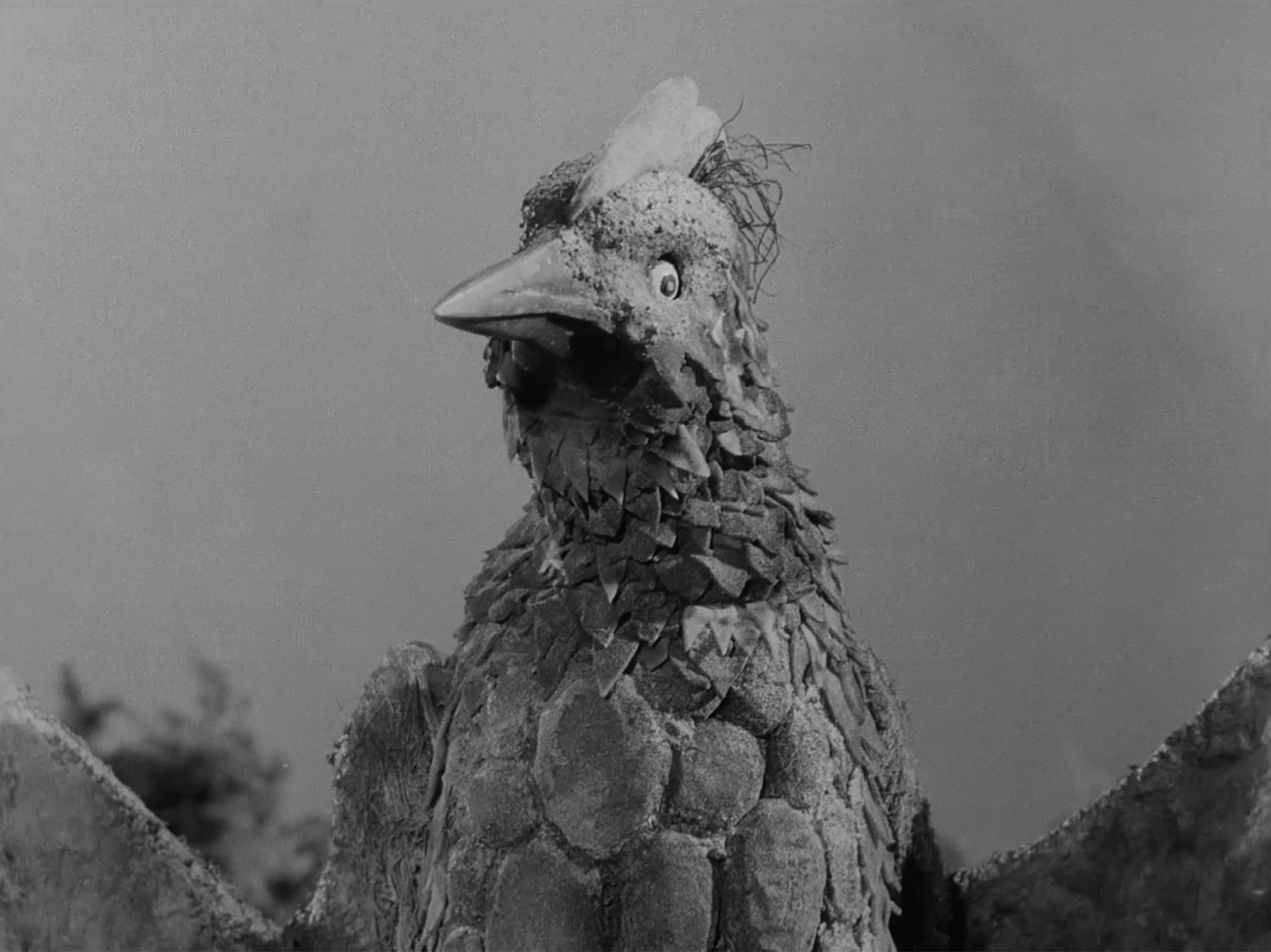
Rodan is also in this episode, although less conspicuously. A Rodan puppet from Ghidorah, the Three-Headed Monster was molded into the phoenix-like beast Litra, Gomess’s opponent. Litra can spit a powerful acid, citronella, which I hear works well at repelling insects. Litra has also had a career after Ultra Q, taking on a heroic kaiju role in Ultra Galaxy Mega Monster Battle.
The story recalls the early parts of Rodan: workers in a tunnel discover a strange creature, and one of the workers stumbles out suffering from what the others assume is a hallucination. Then there’s a swerve into mythical, Mothra-esque territory: Gomess and Litra are found in an ancient document describing their eventual confrontation. A full-length kaiju film might have come from this material, but the script condenses it to a half-hour while still giving viewers what they hoped to get from Ultra Q — a SF monster story sent straight to their living rooms.
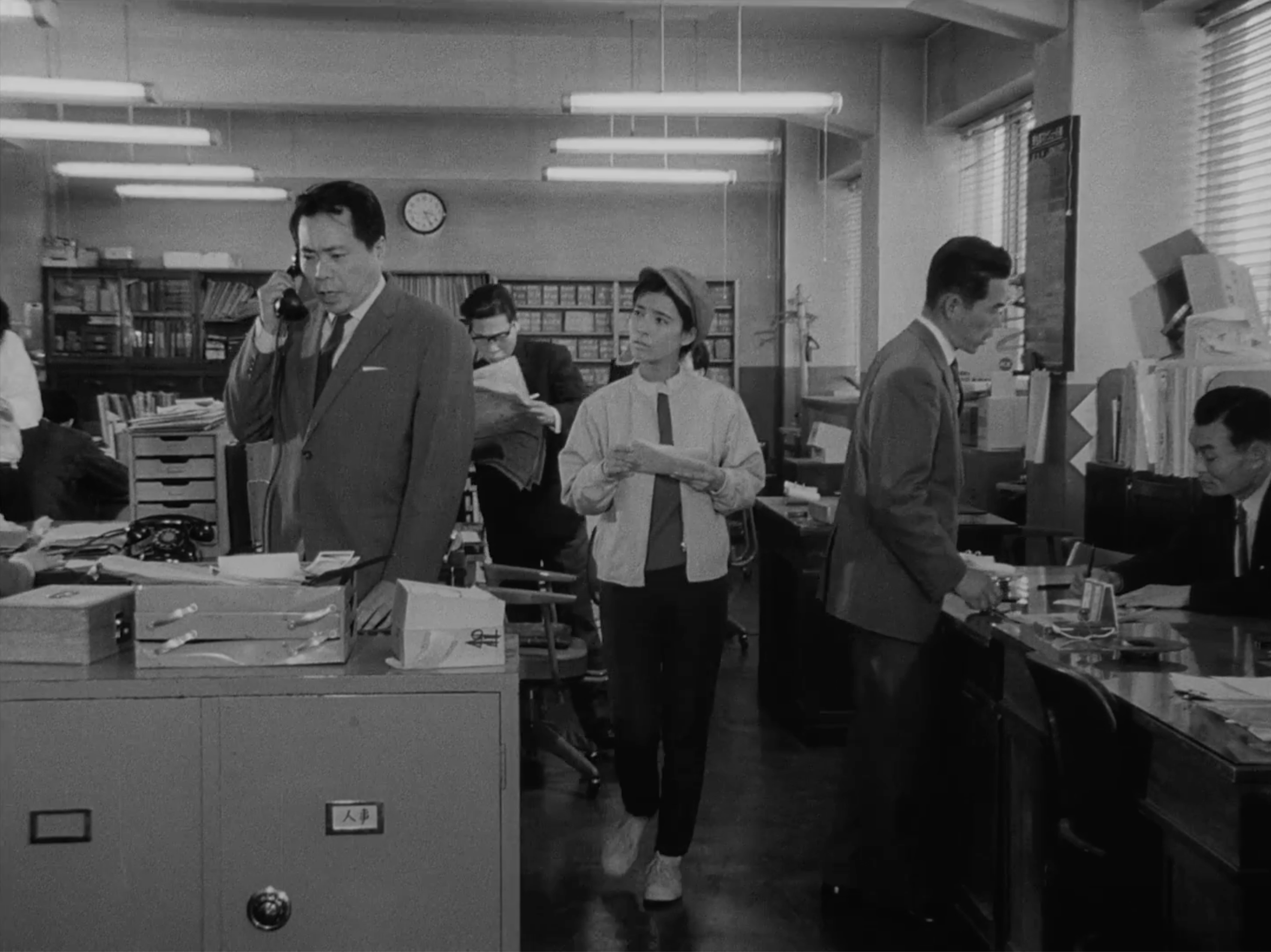
Although we don’t have an official introduction to the main characters, the episode trots them out fast, each shown doing their main job so viewers have an immediate idea of who they are. Yuriko is in the offices of the Daily News, asking her boss to send her to the scene of the tunnel project to take photos. Then Jun and Ippei fly her out in a helicopter to check out the disturbances. The episode then establishes one of the key character dynamics of the show: Yuriko and Jun ditching poor Ippei to run off on their own. That’s fine, since Ippei has scenes with the first of many child guest stars of the franchise, Jiro, a boy genius who solves the riddle of Litra’s egg. The only key character we don’t meet is Professor Ichinotani, who won’t show up until episode three.
A mix of science and legends, an interesting central cast, cinematic photography, a bit of poignancy at the end, and remarkable special effects unlike anything yet seen on Japanese TV … Ultra Q was off to a good start. And much better was to come.
Rating: Good
Previous: Ultra Q: An Introduction
Next: Goro and Goro
- Okay, you wouldn’t actually hear Ishizaka say these words in this episode (I took them from the next episode, “Goro and Goro”), but I wanted to bring up this phrase early, as it’s Ultra Q’s equivalent to “Your next stop, The Twilight Zone!” ↩︎
 The Ultra Project